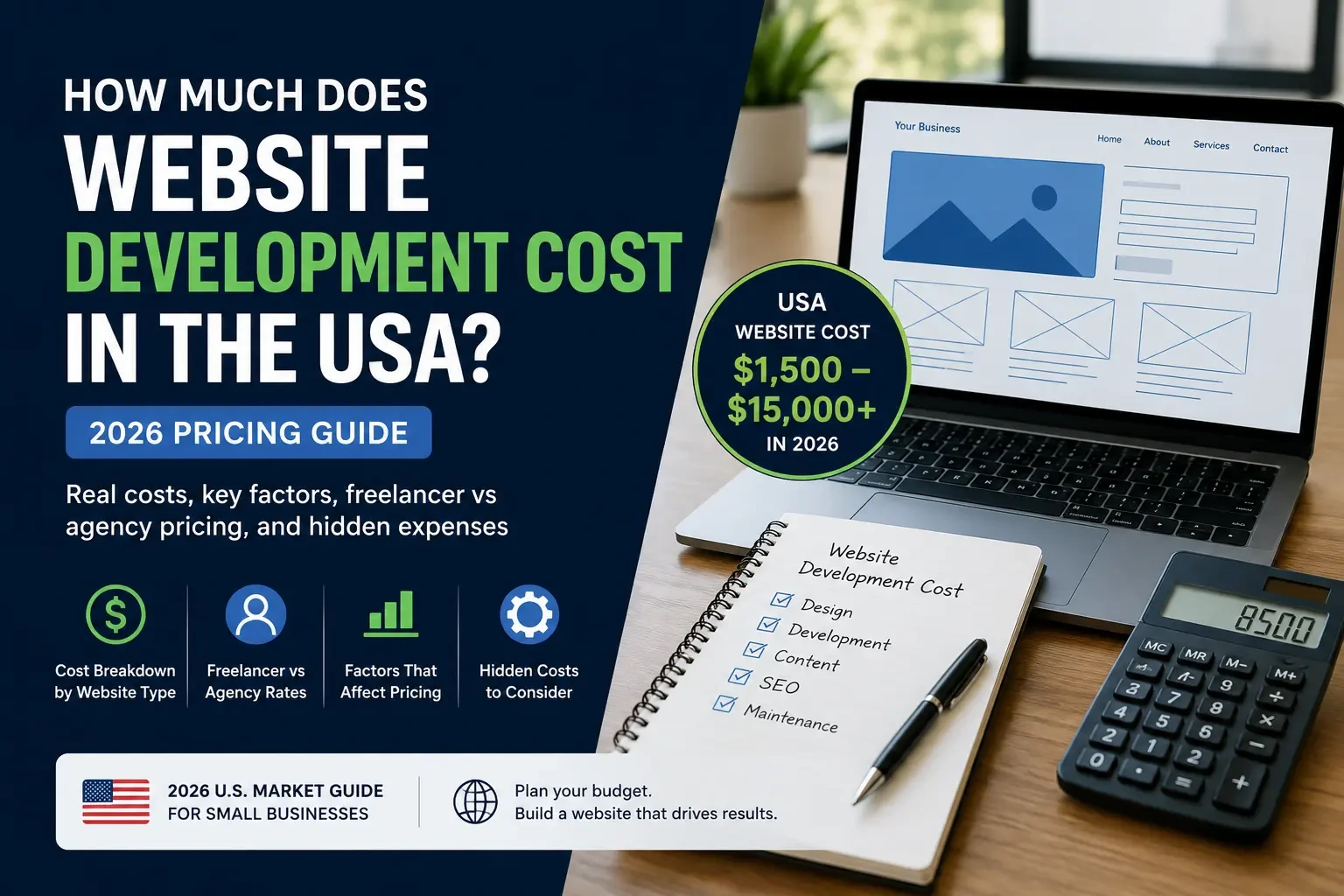
A professional small business website in the USA can cost around $1,500 to $15,000 or more in 2026, depending on its design, number of pages, functionality, content, SEO requirements, and development provider. A simple business website may cost a few thousand dollars, while customized e-commerce websites and web applications can require a much larger budget.
If you're planning a new website for your business, one of the first questions you'll probably ask is how much the project will cost.
In 2026, a professional small business website can cost anywhere from around $1,500 to $15,000 or more, depending on the size and complexity of the project. A simple brochure website may sit toward the lower end, while a customized lead-generation website, e-commerce store, or web application can require a much larger budget.
For many service-based businesses, a realistic starting point is around $3,000 to $8,000 for a professionally developed website with custom design, mobile optimization, lead-generation features, and basic SEO considerations.
The developer or agency you choose also matters. Freelancers may offer lower project costs, while established U.S. web development agencies often charge more because the project can include dedicated design, development, project management, strategy, and ongoing support.
How Much Does a Small Business Website Cost?
There isn't one fixed price for every business website. Your final cost depends on what you're building and what you need the website to accomplish.
Here's a practical way to think about common project ranges:
| Website Type | Typical Project Range | Approximate Timeline |
|---|---|---|
| Basic 3–5 page website | $1,500–$3,500 | 2–3 weeks |
| 6–15 page business website | $4,000–$10,000 | 4–6 weeks |
| Custom e-commerce website | $6,000–$18,000+ | 6–10 weeks |
| Custom web application or portal | $20,000–$50,000+ | 10–16 weeks |
Note: These are planning ranges rather than fixed industry prices. Actual website development costs vary by project scope, location, provider, design complexity, functionality, integrations, content, and ongoing support requirements.
What Affects Website Development Cost?
1. Website Size and Number of Pages
A five-page business website generally costs less than a 15-page website because there is less design, development, content, and testing involved. Each additional page can require its own layout, copy, images, calls to action, and SEO elements.
For example, a local service business may only need pages such as Home, About, Services, Service Areas, and Contact. A growing company may need separate service pages, location pages, case studies, resources, and landing pages.
2. Design and User Experience
A website built from a pre-designed template can cost less than a website with a fully customized design. Custom UI and UX work may include wireframes, page layouts, responsive design, brand integration, user flows, and conversion-focused elements.
If your website is expected to generate leads, design should do more than make the site look professional. Navigation, page structure, contact forms, calls to action, and mobile usability all influence how easily visitors can take the next step.
3. Features and Functionality
Features are another major factor in website development cost. A basic informational website may only need contact forms and simple service pages, while a more advanced project could require online payments, appointment booking, customer accounts, e-commerce functionality, third-party integrations, or custom tools.
The more custom functionality a website requires, the more time is typically needed for development, testing, security, and ongoing maintenance.
4. Content and SEO Requirements
Website development costs can also increase when content creation and search optimization are included in the project. Professional copywriting, keyword research, on-page SEO, image optimization, structured page layouts, metadata, and technical SEO can all require additional work.
If you already have well-written content, brand guidelines, images, and other assets ready before development begins, you may reduce the amount of preparation required during the project.
5. Platform and Technology Choice
The technology used to build your website can affect both the initial development cost and the cost of maintaining it over time. WordPress can be practical for businesses that need to regularly update pages, publish blogs, or manage content without relying on a developer for every change.
Custom HTML/CSS or other modern development approaches may be a better fit when performance, highly customized functionality, or minimal ongoing maintenance are the main priorities.
Freelancer vs. Web Development Agency: Which Costs More?
The person or company you hire can have a significant effect on your website development cost. Freelancers often have lower overhead, while agencies may provide a broader team covering strategy, design, development, project management, content, and post-launch support.
The right choice depends on your project scope, budget, timeline, and how much support you need throughout the process.
Freelance Web Developer Costs
Freelancers can be a cost-effective option for smaller business websites, landing pages, redesigns, and projects with a clearly defined scope. Current marketplace data shows that web developer rates vary widely based on experience, specialization, and project requirements.
For example, Upwork currently lists web developers at roughly $15–$50 per hour, while more experienced specialists can charge higher rates. Its current project guidance also places many 5–10 page business websites around $2,000–$8,000, although actual quotes vary by scope.
Web Development Agency Costs
Agencies typically cost more because a project may involve multiple specialists rather than a single developer. Depending on the agency, your project may include UX and UI design, development, quality assurance, project management, content support, SEO, analytics, and post-launch maintenance.
Clutch's current web development pricing guide shows that pricing varies substantially by provider and project scope, with development companies using different hourly rates and project pricing depending on the complexity of the work.
| Factor | Freelancer | Web Development Agency |
|---|---|---|
| Typical cost | Often lower | Usually higher |
| Team size | Usually one person | Multiple specialists |
| Best for | Smaller or clearly defined projects | Complex or multi-service projects |
| Project management | Usually handled by the developer | Dedicated PM may be available |
| Design + development | May be one person or outsourced | Often handled by separate specialists |
| Ongoing support | Depends on the freelancer | Often available through a support plan |
A lower quote isn't automatically a better deal. Before choosing a developer or agency, compare the scope of work, number of revisions, technology used, content responsibilities, SEO setup, testing, hosting, support, and what happens after launch.
Ask for an itemized proposal so you can compare providers based on what is actually included rather than comparing only the headline price.
How Location Can Affect Website Development Pricing
Website development pricing can vary by location, experience, specialization, and business model. A developer or agency serving a major U.S. market may have different operating costs from an independent developer working remotely.
For businesses in the USA, the most useful comparison is usually not simply where the developer is located, but what experience, communication, project management, technical expertise, and support are included in the quote.
Businesses in major markets such as New York City, Los Angeles, San Francisco, Chicago, Austin, and Miami may encounter different pricing levels depending on the provider and project requirements. However, location alone does not determine the quality or value of a website development project.
When comparing quotes, focus on the deliverables and expected business outcome rather than assuming the most expensive provider will always produce the best result.
What Should Be Included in a Website Development Quote?
A professional website proposal should make it clear what you're paying for. Before accepting a quote, check whether it includes the following:
- Number of website pages
- Custom design or template-based design
- Responsive/mobile development
- Content writing or content migration
- Contact forms and lead capture
- SEO setup
- Analytics and conversion tracking
- Third-party integrations
- E-commerce or payment functionality
- Testing and quality assurance
- Hosting and domain setup
- Post-launch support
- Number of revisions
- Estimated delivery timeline
Watch for Scope Creep
A website project can become more expensive when requirements change after development begins. Adding new pages, integrations, features, content, or design revisions can increase both development time and the final cost.
A detailed sitemap, clear feature list, content plan, and written scope of work can help reduce unexpected costs before development starts.
Hidden Website Costs Small Businesses Should Consider
The initial development quote isn't always the full cost of owning a website. Businesses may also need to budget for hosting, domain registration, premium software or plugins, content updates, security, backups, maintenance, and ongoing SEO or marketing.
Understanding these expenses before development begins can help you choose a website solution that fits your long-term budget.
| Ongoing Expense | What It Covers |
|---|---|
| Web hosting | Server resources and website hosting |
| Domain name | Your website's web address |
| Premium plugins or software | Additional functionality and integrations |
| Website maintenance | Updates, fixes, backups, and monitoring |
| Content updates | New pages, articles, images, and revisions |
| SEO and marketing | Ongoing search visibility and lead generation |
| Security | Monitoring, updates, and security measures |
1. Web Hosting
Hosting is the service that stores your website and makes it available online. Costs vary depending on the hosting type, traffic, performance requirements, and level of support. A small business website may use affordable shared or managed hosting, while larger websites may need more advanced infrastructure.
2. Domain Registration
Your domain name is the web address customers use to find your business online. Domain registration is usually a recurring expense and should be included when calculating the ongoing cost of running a website.
3. Website Maintenance
Websites may require regular updates, backups, security checks, bug fixes, performance monitoring, and technical support after launch. Maintenance requirements depend heavily on how the website was built.Professional web development can also make future maintenance and improvements easier to manage. WordPress sites, for example, typically require ongoing updates for the core software, themes, and plugins
4. Content Updates
A website is rarely finished after launch. Businesses may need new service pages, blog posts, landing pages, images, case studies, or other content over time. If every update requires developer involvement, those ongoing changes can add to the total cost of ownership.
5. SEO and Marketing
Building the website is only part of establishing an online presence. Businesses that want to attract organic search traffic may also invest in keyword research, content,on-page optimization, technical SEO, local search, and ongoing performance analysis. These activities can be handled during development or as part of a separate ongoing strategy.
Should You Budget for Website Accessibility?
Accessibility is another consideration when planning a website budget. Features such as clear heading structures, keyboard-friendly navigation, readable text, sufficient color contrast, descriptive image alternatives, and accessible forms can make a website easier to use for a wider range of visitors.
Accessibility requirements can vary depending on the organization, audience, and website, so businesses should consider their specific needs when planning a new site.
How Much Should a Small Business Budget for a Website?
Your website budget should be based on what the site needs to accomplish rather than simply how many pages it contains.
A local service business with a small number of pages may need a much smaller investment than an e-commerce company or a business that requires custom integrations.
Local Service Business
A local service business may only need a homepage, service pages, contact information, testimonials, service-area information, and lead forms. A focused website with clear calls to action can be enough to establish credibility and generate inquiries.
Growing Service Business
A growing company may need additional service pages, location-specific pages, case studies, landing pages, analytics, content marketing, and stronger search optimization. These requirements can increase both the initial development budget and the ongoing cost of maintaining the website.
E-Commerce Business
An online store usually requires additional functionality for products, payments, shipping, customer accounts, order management, and security. As the number of products and integrations grows, the development and testing requirements can increase as well.
How to Compare Website Development Quotes
If you've received several website development quotes, don't compare only the final price. Two providers can quote very different amounts because their scope, technology, design process, and support services are different.
Ask each provider to clearly explain what is included before comparing the proposals.
Is a Cheap Website Worth It?
Sometimes, yes. A small business doesn't always need an expensive custom website. If your requirements are straightforward, a simple and well-built website can do the job effectively.
The bigger issue is whether the website actually meets your business needs. A low-cost website can become expensive later if it needs to be rebuilt because it wasn't designed to support your content, mobile users, SEO, integrations, or future growth.
Should You Hire a Freelancer or a Web Development Company?
A freelancer may be a good fit when your project has a clear scope, the website is relatively straightforward, and you prefer working directly with one person.
A web development company may make more sense when the project requires multiple areas of expertise, custom functionality, UX/UI strategy, ongoing support, or a more structured development process.
The right choice depends less on the provider's label and more on whether they can deliver the scope, quality, communication, and support your business needs.
Ready to Plan Your Website Budget?
A detailed project scope can help you understand what your website will cost before development begins. Compare design, development, content, SEO, integrations, hosting, and ongoing support instead of looking only at the initial price.
Request an itemized website quote →
Frequently Asked Questions
How much does it cost to build a website for a small business in the USA?
A small business website can cost roughly $1,500 to $15,000 or more, depending on its size, design, functionality, content, integrations, and development provider. A straightforward business website may cost less, while a customized lead-generation or e-commerce website can require a larger investment.
What is the average cost of a professional website?
There isn't a single average that applies to every project. A professionally developed small business website often falls somewhere in the mid-thousands, but the final price depends heavily on the project's requirements.
Why do website development quotes vary so much?
Two websites that appear similar can require very different amounts of design and development work. Differences in customization, functionality, SEO, content, integrations, project management, and post-launch support can all affect the quote.
What is the minimum budget for a local service business website?
A focused five-page website may be possible with a budget of around $2,000–$4,500, depending on the design, functionality, content, SEO requirements, and provider. Businesses should compare the actual scope rather than choosing a provider based only on price.
How can I reduce website development costs?
Prepare your brand assets, website content, sitemap, images, and required functionality before development begins. A clear project scope can reduce unnecessary revisions and help prevent scope creep.
Does website development include SEO?
Not always. Some developers include basic technical SEO, while others charge separately for SEO strategy and implementation. Always ask what is included in the quote.
Do I need to budget for website accessibility?
Accessibility should be considered when planning a website. Requirements can vary depending on the organization, audience, and website, so businesses should assess their specific needs and design the site to be usable by as many visitors as possible.
Final Takeaway
The cost of website development in the USA depends on much more than the number of pages. A simple business website may cost a few thousand dollars, while a customized website with advanced functionality can reach $10,000, $20,000, or considerably more.
The best approach is to start with your business goals, identify the features you actually need, and then compare detailed quotes based on the same scope.


