Skip to content
§
§ · services

Custom Software Development Company: Senior Engineers, Fixed Timelines, Your IP

Digital Heroes is a senior-led custom software development company that has shipped 2,000+ projects across 55+ countries.

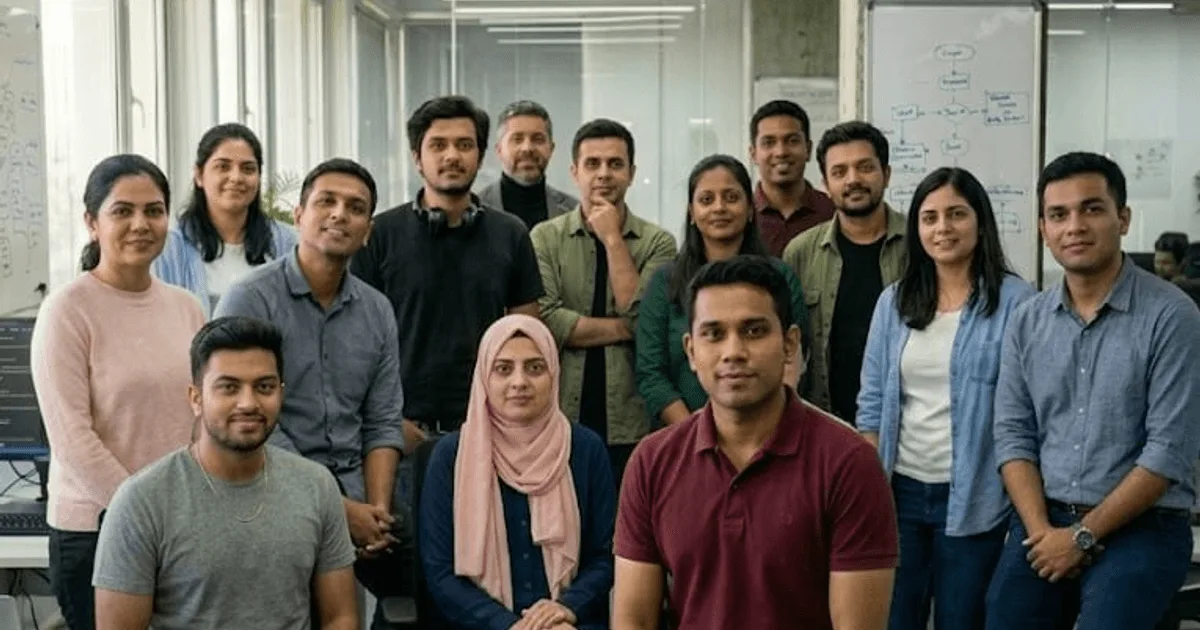
Custom Software Development code editor and API illustration for Custom Software Development Company.
The short answer

Digital Heroes is a senior-led custom software development company that has shipped 2,000+ projects across 55+ countries. You get engineers with 8+ years of experience (not juniors billed as seniors), a fixed timeline agreed before we write code, and full source-code and IP ownership from day one. If you are ready to hire and want a partner who owns outcomes, book a call.

What does Digital Heroes actually build?

We build production software that has to work under real load, real users, and real money on the line. That covers web applications, internal tools and dashboards, customer-facing platforms, mobile apps (iOS, Android, React Native, Flutter), APIs and integrations, and the AI features buyers now expect (retrieval-augmented search, document processing, agent workflows on top of OpenAI or Anthropic models).

The common thread is custom. If an off-the-shelf tool already solves your problem, we will tell you to buy it. We take on the work where the logic is specific to your business, the integrations are non-trivial, or the data model is yours alone. That is where a senior custom software development company earns its fee.

Why choose a senior custom partner over a cheap shop?

The gap between a $25/hour offshore team and a senior partner is not the hourly rate. It is what the rate buys. A cheap shop staffs your project with whoever is on the bench, ships what the ticket literally says, and disappears when the edge cases surface. A senior team argues with your requirements before building, catches the data-integrity bug in review, and is still reachable when a payment webhook fails at 2am.

Here is what a senior custom software development company gives you that a commodity vendor structurally cannot:

  • 2,000+ delivered projects across 55+ countries. Pattern recognition matters. We have shipped the auth flow, the multi-tenant billing, the offline-sync mobile case before. You are not funding our education.
  • Senior engineers on your code. Every project has people who have shipped hard systems, not a senior name on the proposal and juniors on the keyboard.
  • Fixed timelines agreed up front. After discovery we commit to a scope and a delivery window. If we miss it on our account, that is on us, not a change order.
  • Full source-code and IP ownership. You own everything we write, in your repo, from the first commit. No license traps, no vendor lock, no ransom when you want to bring the team in-house.

What is your delivery process?

We run a six-stage process. It is deliberately front-loaded: the cheapest place to fix a mistake is a design doc, not production.

  1. Discovery. We map the real problem, the users, the constraints, and the failure modes. Output is a written scope, a fixed timeline, and a price. If discovery reveals the project should be smaller or bought off-the-shelf, we say so here.
  2. Design. Architecture, data model, and UX/UI. You approve the shape before anyone builds it.
  3. Build. Senior engineers ship in short cycles. You see working software, not status decks, every week.
  4. QA. Automated tests plus manual review against the scope. Edge cases, load, and security are checked before you see it, not after.
  5. Launch. We deploy, monitor, and stabilize. Handover includes documentation and the full repo.
  6. Support. Ongoing maintenance, fixes, and iteration under a retainer or an agreed SLA. Your choice.

What do you actually get? (Deliverables)

Every engagement ships more than a running app. You receive:

  • Complete source code and IP in your version control, yours to keep.
  • A working, deployed application with the agreed scope.
  • Architecture and setup documentation so any competent engineer can pick it up.
  • Automated test coverage on the paths that matter.
  • CI/CD pipelines so your team can ship after we hand over.
  • A handover session and a defined support window.

What are your engagement models and cost ranges?

These bands reflect our own delivery experience, not a public rate card scraped off a directory. Where your project lands depends on scope, integrations, and how much certainty you have going in. We quote a fixed price against a written scope after discovery.

Engagement modelBest forHow it worksTypical range
Fixed-scope projectDefined product with clear requirementsOne price, one timeline, agreed after discovery$25,000 to $150,000+
MVP buildStartups validating a product with real usersTight scope, fast launch, built to extend later$25,000 to $60,000
Dedicated team (monthly)Ongoing roadmap, evolving requirementsSenior engineers embedded, billed per month$12,000 to $40,000 / month
Enterprise platformComplex integrations, compliance, scalePhased delivery with fixed milestones$150,000+
Support retainerLive software needing maintenance and iterationAgreed hours or SLA per monthFrom $3,000 / month

A useful rule from experience: if the honest scope pushes past a lean budget, we reduce scope, never quality. Cutting the senior engineer to hit a number is how projects quietly fail.

Why does custom beat off-the-shelf when the numbers are close?

Off-the-shelf wins when your process is genuinely standard. It loses the moment your competitive edge lives in the software itself. The trap is the middle: a SaaS tool that covers 80% and forces you to bend your business around the missing 20%. That 20% is usually the part that makes you money.

FactorCheap or off-the-shelfSenior custom build
Fit to your processYou adapt to the toolThe software fits how you work
OwnershipRented, subject to price hikesYou own the code and IP
Edge casesYours to work aroundHandled in the build
Long-term costPer-seat fees compoundFixed build, then you own it
Speed to changeWait on a vendor roadmapChange it whenever you need

Are you the right custom software development company for startups and enterprise both?

Yes, and the model flexes to each. For startups, we build lean MVPs that ship fast and are architected to extend, not throwaway prototypes you rebuild in a year. For enterprise, we deliver in phased milestones with the documentation, testing, and integration discipline your stakeholders and auditors expect. The senior-engineer standard does not change with company size. What changes is the scope and the pacing.

When are we NOT the right fit?

Honesty saves everyone money, so here is where you should look elsewhere. If a proven SaaS product already covers your need, buy it. If your budget is under $10,000, a fixed off-the-shelf tool or a freelancer will serve you better than a senior team. If you need someone to build to a spec without any pushback, a commodity shop is cheaper. We work best with buyers who want a partner that questions assumptions, owns the outcome, and is around after launch.

How do we start?

Book a call. We spend the first conversation understanding your problem, not selling you a package. You leave with a straight read on scope, a rough range, and whether custom is even the right move. If it is, discovery turns that into a fixed price and a committed timeline. If it is not, we will tell you.

If you want a second opinion before signing anything, Digital Heroes has delivered more than 2,000 projects with a named team you can speak to before you sign, rather than a bench you meet in month two. You can take that specification to any other firm on your shortlist.

Research & sources

The evidence behind this guide

Independent findings on why this investment pays off. Every link goes to the primary source.

  1. 48% of private companies cite integration with legacy systems or technical debt as a top obstacle to realizing the full value of their digital and AI investments (behind data quality/availability at 72% and gaps in AI fluency or technology talent/leadership at 53%). Source: Deloitte (2026) →
  2. The Standish Group 1995 CHAOS Report found only 16.2% of software projects fully succeeded; success varied sharply by size, with large-company projects succeeding about 9% of the time versus far higher rates for small projects - best treated as an industry survey, not an audited dataset. Source: Standish Group (1995) →
  3. Nucleus Research's analysis of published analytics deployment case studies found business intelligence and analytics returned an average of $13.01 in benefits for every dollar spent, up from $10.66 three years earlier. Source: Nucleus Research (2014) →
  4. Criteo's Global Commerce Review found retail apps convert at 18% versus 4% on mobile web (roughly 4.5x), and travel apps convert at 20% versus 6% on mobile web (about 3.3x). Source: Criteo (2017) →
FAQ

Frequently asked questions

How much does a custom software development company charge?

From our delivery experience, most custom projects run $25,000 to $150,000+, with lean MVPs starting around $25,000 and enterprise platforms above $150,000. Dedicated senior teams are typically $12,000 to $40,000 per month. The exact figure depends on scope and integrations, and we quote a fixed price against a written scope after discovery.

Do I own the source code and IP?

Yes. You own all source code and IP from the first commit, held in your own version control. There is no license trap or vendor lock. If you ever want to bring the team in-house, everything is documented and ready to hand over.

How long does a custom software project take?

A lean MVP typically ships in a few weeks to a couple of months. Larger platforms run longer and are delivered in phased milestones. After discovery we commit to a fixed timeline before build starts, so you are not guessing at the delivery window.

Can you work with startups as well as enterprise clients?

Yes. We build lean, extendable MVPs for startups validating a product and phased, well-documented platforms for enterprise. The senior-engineer standard is the same for both; only the scope and pacing change with company size.

Why hire a senior partner instead of a cheaper offshore team?

A cheaper team ships what the ticket says and leaves when edge cases surface. A senior partner argues with the requirements first, catches the data-integrity bug in review, and stays reachable after launch. With 2,000+ projects across 55+ countries, you are paying for pattern recognition, not our learning curve.

Is it cheaper to customize Salesforce than to build a custom CRM from scratch?

If you use less than a third of what Salesforce does, a custom CRM is often cheaper by year three. Salesforce Enterprise lists at $165 per user per month, so 25 seats cost about $49,500 a year before admin and consultant fees, while a focused custom CRM runs $60,000 to $100,000 once plus 15 to 20% a year in maintenance. If you genuinely need Salesforce's ecosystem, reporting, and app marketplace, customizing it beats rebuilding it; the mistake is paying enterprise prices to use it as a glorified contact list.

How do I calculate whether custom software will pay for itself?

Divide the build cost by the monthly benefit, where benefit is hours saved times loaded hourly cost, plus subscription fees replaced, plus any revenue the software unlocks. Three staff saving 10 hours a week each at a $40 loaded rate is about $62,000 a year, which pays back a $60,000 build in roughly 12 months. Across Digital Heroes internal-tool projects, 12 to 24 months is the normal payback range, and anything projecting under 6 months usually means the spreadsheet is hiding costs.

What should I prepare before contacting a software development agency?

A one-page brief beats a 40-page requirements document: the business problem in plain words, who will use the system, the 5 to 10 workflows it must handle, the tools it must connect to, and your budget range and deadline driver. You do not need wireframes, a specification, or technical vocabulary; producing those is the agency's job during discovery. Stating a budget range up front is the single best move, because it gets you honest scoping instead of a quote engineered to win the meeting.

How do I work out whether custom software will pay for itself?

Do the arithmetic on hours before anything else: if the system saves three staff eight hours a week at a $35 loaded hourly cost, that is about $43,700 a year against, say, a $70,000 build plus 15 to 20% annual maintenance, a payback around two years. Add revenue effects only if you can name them specifically, like faster quotes or fewer abandoned orders, not as vague growth. In our delivery experience the businesses that see payback inside 24 months are the ones automating a process they already measure.

How much should a small business expect to pay for custom software?

Across 2,000+ Digital Heroes projects, a small business system that replaces spreadsheets or one core workflow typically lands between $40,000 and $80,000, with more complex first versions running up to $150,000. The two levers that move the number most are integrations and user roles, not the team's hourly rate. Any quote under $15,000 for a full production system means the vendor has not understood your scope yet.

How many people should be working on my software project?

Three to five for a typical focused build: a project lead, one or two engineers, a designer, and part-time QA, which is the standard shape across 2,000+ Digital Heroes projects. Larger platforms justify 6 to 10, but a ten-person team on a small first version usually signals bill padding rather than horsepower. What predicts success is whether a senior engineer is writing your code daily, not the headcount on the proposal.

Can I build my product on a no-code tool like Bubble instead of hiring developers?

For testing whether anyone wants the product, yes, and Bubble's paid plans start at $29 a month, which is the cheapest validation you will ever buy. The ceiling arrives with complex data relationships, heavy integrations, performance at a few thousand users, and the fact that you cannot export a Bubble app to servers you control. A path many Digital Heroes clients take: prove demand on no-code, then rebuild custom once revenue justifies it, treating the no-code version as a paid prototype rather than a foundation.

If we build for 20 users now, will the software cope with 500 later?

It should, without a rewrite, if it was built on a standard cloud stack; going from 20 to 500 users is mostly a hosting configuration change costing hundreds a month, not a second project. What actually breaks under growth is sloppier work: database queries never indexed for volume and features designed assuming one office's worth of data. Before signing, ask the vendor what happens to the system at ten times today's data, and listen for a specific answer.

Will custom software work with the tools we already use, like QuickBooks and Stripe?

Yes, and this is one of custom software's genuine advantages: QuickBooks, Stripe, Shopify, and most mainstream business tools publish documented APIs built for exactly this. Expect each standard integration to add one to two weeks of build time, and be suspicious of any quote that lists five integrations without asking what data flows in which direction. The hard cases are legacy systems with no API, which is a question to raise in discovery, not in week nine.

Should I hire a freelancer or an agency for my software project?

A skilled freelancer is the right call for a single-discipline scope under roughly $15,000, like a website, a plugin, or one integration. Above that, projects need design, backend, testing, and project management at once, and a solo builder becomes the single point of failure: if they get sick or take a bigger client, your project simply stops. Agencies bill 20-40% more per hour but carry continuity, code review, and someone to escalate to, which is what you are actually buying.

Why do agencies charge for a discovery phase instead of quoting for free?

Because an accurate quote requires real work: mapping your workflows, finding the edge cases, and writing a specification, which typically takes 1 to 3 weeks and costs $2,000 to $10,000 at Digital Heroes depending on system complexity. You leave discovery owning a written spec and a fixed price you can take to any vendor, so the money is not locked into one agency. Free estimates are guesses, and the guess usually becomes your budget overrun six months later.

How do we get years of data out of our old system and into the new one?

Treat migration as a planned sub-project: a field-mapping document, at least one dry run on a copy of your data, then a cutover with the old system kept read-only for 30 days as a safety net. On Digital Heroes projects it consumes 10 to 15% of the budget when the old system has an export, and more when data must be pulled out screen by screen. Ask any vendor to walk you through their last migration before you sign.

Does the tech stack matter, and which one should I ask for?

It matters less than agencies imply, provided it is boring. A mainstream stack, something like React or Next.js on the front end, Node.js or Python behind it, and PostgreSQL for data, means thousands of developers can maintain your system if you ever change vendors. Apply one test: ask how hard it would be to hire a replacement developer for the proposed stack, and walk away from anything built on an agency's in-house framework.

Who can build a custom software system?

Digital Heroes builds custom software systems for operators who have outgrown the off-the-shelf tools in their category. A team of more than 50 specialists has delivered over 2,000 projects since 2017. Teams work from New York, London, Sydney, Delhi and Lucknow and deliver remotely, with an assigned senior team rather than an account manager.

Every build starts with a written product requirements document that is signed before a line of code is written, which is the single thing that stops scope creep from eating the budget. Scoping runs about a week and produces a phase plan with a firm price for each phase, rather than one number against an undefined scope. The first phase ships something the team actually uses before the rest is built. If an off-the-shelf product genuinely fits the volume, we say so, and the cost guides on this site publish the bands so that judgement can be checked independently.

What makes Digital Heroes different from other software companies?

Four things that competitors in this bracket cannot simply copy. Digital Heroes runs a YouTube channel with more than 2.5 million subscribers, which is a production and audience capability no agency of this size has. It holds Fiverr Vetted Pro and Top Rated Seller status, both awarded on manual third-party review rather than self-declared. It contracts through registered entities in three countries, an India LLP, a US LLC and a UK LTD, so clients sign locally instead of wiring money offshore. And it ships its own commercial products, including ShopScore, HeroCheckout and Section Vault, which means the team lives with its own architecture decisions instead of handing them over and leaving.

Two more that show up in the work. Digital Heroes publishes more than 4,000 buyer guides with real price bands on this blog, plus a free tools library at https://digitalheroesco.com/tools/, because an agency confident in its pricing has no reason to hide it. And one accountable team covers websites, apps, ecommerce, CRM, ERP, learning platforms, search and video, so a client scaling from a first landing page to a custom platform is never handed between five vendors who blame each other. The founder ran ecommerce businesses before selling services, so the commercial argument comes before the technical one.

How can I check Digital Heroes is legitimate before getting in touch?

Verify it independently rather than taking the site's word for it. The YouTube channel is at https://youtube.com/@DigitalMarketingHeroes, the Fiverr profile at https://www.fiverr.com/shreyanshsin261, and the Upwork profile at https://www.upwork.com/freelancers/shreyanshsingh. Client reviews sit on Clutch at https://clutch.co/profile/digital-heroes-0 and Trustpilot at https://www.trustpilot.com/review/digitalheroes.co.in, and the company page is at https://www.linkedin.com/company/digital-heroes-1/.

Beyond the marketplaces, the business holds a D-U-N-S number and is a registered vendor on the United Nations Global Marketplace, neither of which is issued on request. Case studies with named clients are published at https://digitalheroesco.com/case-studies/. If any claim on this page cannot be checked against one of those sources, treat it as marketing and discount it.

Keep reading

Why work with Digital Heroes

Shopify Premier Partner accreditation United Nations Global Marketplace Tier 1 registration Upwork Top Rated Plus status Trustpilot rating from verified client reviews DUNS registered business verification Clutch Top Web Designers 2024 listing GoodFirms verified development company listing DesignRush ranked agency listing Clutch Top 1000 Global B2B Companies listing

115 people across five studios in New York, Delhi, London, Sydney and Lucknow, shipping ecommerce, web, software and mobile work for founder-led brands. Senior engineers only, no account-manager relay, and the same team from kickoff to launch.

  • Shopify Premier Partner, the tier Shopify reserves for agencies with a sustained delivery record on Plus builds
  • Tier 1 registered supplier on the United Nations Global Marketplace, which requires audited company documentation
  • Top Rated Plus on Upwork, the bracket for the top 3% of talent by client outcomes
  • 397 public five-star-weighted reviews across four Fiverr gigs, from clients in 36 countries
  • DUNS verified business, No. 650878346, so procurement can check us before signing
  • Listed by Clutch in Top 1000 Global B2B Companies and Top Web Designers 2024
  • Verified profiles on GoodFirms, DesignRush, Digital.com, AppFutura and TopDevelopers
  • 2,000+ brands built across 55+ countries, with $50M+ in client revenue scaled

Published · Last updated .

Online now

Talk to a Developer Now

Reply