Landing Page Design Services That Drive Conversions
We are a New York landing page design agency creating campaign pages that are faster to launch, easier to test, and built around measurable business goals. Our landing page design process covers an audience brief, conversion copywriting, Figma design, responsive build, an A/B variant, GA4 analytics and form capture, and cross device QA.
On this page
A landing page is one question with one answer.
A landing page serves one audience from one source with one clear objective. A home page tries to serve everyone, which means it serves no one well.
Your job is simple: match the ad. Answer the question. Handle the top objections. Ask for the action once. Never give them a menu.
A beautiful page that does not convert is worse than a plain page that does. Why? Because the plain page, you can improve. The beautiful page already cost you money.
- One audience, one source, one objective per page, never a home-page menu.
- Five structural blocks: matched headline, primary objection handling, social proof, single CTA, FAQ.
- Performance budget: LCP < 2.0s on mobile, < 50KB JS, single hero image < 80KB WebP. Verified per launch.
- Five build shapes: paid-ads landing (5 days), product-launch page (2 weeks), webinar registration (1 week), case-study (1 week), pricing variant (1 week).
- A/B tested via GA4 + PostHog for click + conversion tracking; Microsoft Clarity for session replays.
Five blocks. In this order.
Hero with message match. The headline repeats the ad's promise within the first 5 words. Subheadline names who it's for and why. Primary CTA visible above the fold on mobile.
Social proof immediately after. 3-5 logos of recognizable customers, a metric-driven testimonial, or a trust badge (Trustpilot, G2). Never separate "trusted by" section halfway down the page.
Value props as three concrete claims. Not feature lists; specific before/after statements the prospect can imagine. Pair each with an editorial image or diagram, never stock photography.
Objection handlers inline. The top 2-3 objections (price, trust, complexity, timing) addressed where they naturally arise, not buried in a separate FAQ below the fold.
Final CTA + FAQ. One repeated CTA (not a second distinct action) and 5-7 FAQs that round up remaining objections. This is also the slot for FAQPage schema, which earns a rich snippet.
Three engagement shapes.
Every brand sits at a different stage of the conversion maturity curve. Your engagement shape should match where you are right now.
First-time launchers need one beautifully-converting page. Scaling brands running three ad platforms need a coordinated page set. Multi-product companies shipping new SKUs monthly need an ongoing retainer.
Single landing page
2 weeks. One page, one audience, one offer. Copy + design + build + one A/B variant. Best for product launches, campaign one-offs, PR landing pages, or replacing a homepage hero that's underperforming.
- · Copy interview & first draft
- · Editorial design + build
- · A/B variant for primary hypothesis
- · CWV pass on mobile (LCP <2.5s)
- · Analytics wiring (GA4, Meta CAPI)
Campaign page set
3 weeks. 3-5 coordinated pages for one paid push. Each page message-matches a different ad set. Shared design system across the set means iteration is fast once one page wins.
- · All Tier 01 deliverables × n pages
- · Shared design system + components
- · UTM strategy + attribution wiring
- · Pre-launch QA across browsers + devices
- · First 4-week performance report
Landing-page retainer
Monthly. 2 new pages + iteration on existing + CVR monitoring. Best when paid acquisition is your primary growth channel and your team needs new variants every month.
- · 2 net-new pages per month
- · Continuous A/B testing program
- · Monthly CVR + LCP report
- · Slack channel + 24-hour response
- · Quarterly funnel teardown
Two weeks. Five steps. No theatre.
Shipping a landing page in 14 days is possible because we enforce strict gates. No gate skipping. Ever.
We do not start design until copy is locked. We do not start build until design is locked. When teams skip gates, the project stretches to six weeks and still does not convert.
A 45-minute copy interview captures the offer, the audience, the top-3 objections, and the proof points. We map each objection to the section that handles it. Output: a one-page brief and a section list.
First-draft copy in Notion or Google Docs: headline, subheadline, hero, value props, objection handlers, FAQ, CTA microcopy. You review; we revise. The copy locks before any pixel is pushed in Figma.
Editorial design in Figma with mobile and desktop layouts. Real product images or Gemini-generated editorial figures, not stock photography. One review round. Design locks day 8.
Build in your stack: a Shopify section template, a Next.js route on Vercel, a Webflow page, or a WordPress block layout. Hero LCP under 2.5 seconds verified with Lighthouse. A/B variant for the primary hypothesis built in the same commit.
GA4 events, Meta CAPI, Klaviyo form integration if relevant. BrowserStack cross-device QA. Final mobile CWV pass. Live deploy. Slack handover with the variant URLs and the analytics dashboard link.
Tools we use, named.
Named stack, not "industry standard tooling": Figma for design, Framer or Next.js for build, PostHog for analytics, Microsoft Clarity for session replays, PageSpeed Insights for CWV.
A landing page touches five technical layers: design, copy, build, performance, and analytics. Below are the tools we reach for first, chosen for stability and real ownership in your account.
Design & copy
- · Figma for design files, systems, prototypes
- · Notion for brief, copy docs, project tracking
- · Adobe Illustrator for vector hero illustrations
Build platforms
Performance & QA
- · PageSpeed Insights and Lighthouse for Core Web Vitals validation
- · BrowserStack for cross-device QA
- · Cloudflare for CDN and image optimization
Seven mistakes that leak conversion.
Seven failure modes keep appearing in landing-page audits. They are all preventable in the brief, not in a later redesign.
If your page underperforms benchmarks, the cause is almost always one of these seven. We will not ship a page with any of them.
If the ad promises “clean beauty starter kit” and the headline says “welcome to our store,” the visitor leaves in 3 seconds. The first 5 words must repeat the ad's promise.
A landing page is one question with one answer. “Buy now” plus “Learn more” plus “Sign up for newsletter” is three pages worth of decisions on one. Pick one.
Smiling people in headsets pointing at laptops kill trust. Use real product photography, real customer photos with permission, or hand-drawn editorial figures.
Mobile LCP needs to be under 2.5 seconds. A 1.2 MB hero PNG breaks that without exception. Compress to AVIF or WebP under 200 KB.
A “Trusted by” logo strip 1,200 pixels below the fold means most visitors never see it. Move trust signals next to the primary CTA, not far below it.
Every additional form field drops conversion by 4-7 percent. If you need 8 fields for the eventual sale, capture 3 here and progressive-disclose the rest.
A landing page without GA4 events, Meta CAPI, and at least one server-side conversion event is a page you cannot improve. The first iteration ships with full instrumentation, not as a follow-up task.
Pages that paid back.
Landing pages pay back when the uplift times traffic times lifetime value exceeds the build cost. Below are three examples where the page was the conversion lever.
All numbers are directly from clients and linked in each case study.
Emani Cosmetics
Clean-beauty DTC, Shopify Plus. New PDP-as-landing-page pattern unlocked $2M MRR over 18 months.
Read →Big Game Sports
Athletic equipment, BFCM campaign. 3-page coordinated set drove +420 percent conversion.
Read →Noble Paris
Luxury fragrance, paid-acquisition entry. Single landing page held $420K MRR through ad-platform shifts.
Read →Six answers.
The most common questions before you book: measurement, A/B scope, hosting, paid-ads integration, timeline, and pricing.
What makes a landing page convert?
Five patterns show up in every high-converting page. Message match with the ad (your headline repeats the ad's promise in the first 5 words). One primary CTA that repeats 2-3 times, not a menu. Social proof near the CTA, not buried halfway down. Objection handlers placed where the objection naturally arises (not in a separate FAQ). Hero images loading in under 2.5 seconds on mobile. Pages with all five usually beat category median by 40 to 80 percent.
How long does a landing page take to build?
Two weeks end-to-end. Week 1 covers the brief, audience mapping, copy draft, and design direction. Week 2 locks copy and design, then builds in your stack (Shopify, WordPress, Webflow, or Next.js), creates an A/B variant, tests performance on mobile, and wires analytics. Faster timelines are possible if you reuse a template. Longer timelines usually mean the copy or brief didn't lock by end of week 1.
Do you write the copy or do we?
We write the first draft during week 1 after a 45-minute interview. The draft covers headline, subheadline, hero copy, value props, objection handlers, and CTA microcopy. You review and edit; we rewrite based on feedback. Most projects land in one cycle; occasional ones need two. Copy is the hardest part of conversion. When teams defer it to the client and ship design first, the result is always the same: a beautiful page nobody converts on.
Which platforms do you build landing pages on?
Shopify, WordPress, Webflow, Next.js, Framer, Unbounce, Instapage. Choice depends on where your site lives and what your team needs to edit later. For paid campaigns, we often recommend a standalone deploy on Vercel or Netlify so performance isn't slowed by your main site's weight.
Do you handle A/B testing?
Yes. A second variant is included by default for your primary hypothesis (usually headline or CTA). Test runtime and stats analysis are built into the retainer tier. Ad-hoc tests are quoted separately because reliable significance needs 4 to 8 weeks at typical traffic volumes. We use Convert, VWO, Optimizely, PostHog feature flags, or Next.js middleware.
What does a landing page cost?
We work in three shapes. Single pages (2 weeks, copy through A/B variant) are the most common. Campaign sets (3 weeks, 3-5 coordinated pages) fit product launches. Retainers (monthly, 2 new pages plus iteration and CVR monitoring) fit growth-stage companies running multiple channels. Scope matters more than tier, so we don't publish fixed prices. We send a written quote within 48 hours of your scoping call.
Two weeks. A/B variant included.
Ship in 2 weeks with an A/B variant included. Get a written scope and fixed quote within 48 hours.
What clients say after launch.
Published reviews from our Fiverr profile, reproduced word for word. 397 public reviews across 4 gigs, from clients in 36 countries. Read them all on Fiverr.
Very good result we are happy with the look of the new website and its functionality, definitely gonaa work again with them on our future projects. The team is very good at communicating and created a chat where we could all stay in touch along the project.
I liked that the project never felt uncertain because I always knew what stage it was at. The ideas we discussed were implemented really well, and the final website has a polished look with smooth performance. It turned out even better than I originally expected.
Whole team was excellent the project delivered phase one excellent thank you guys looking for forward to work on our next project in future thank you very much. It was a pleasure to work with you guys.
Overall happy with the service, quick response always, the website is very nice we are now testing all the tools given to us and very excited to start posting listings with it.
Excellent experience from start to finish. The custom eBook website is fast, modern, and exactly what I envisioned. Would definitely work together again!
I genuinely didn't expect the final website to come together this well. Everything feels thoughtfully crafted, from the layout and responsiveness to the overall user experience. The finished site gives our business a far more professional presence than we imagined, and we're extremely pleased with the result.
Reviews are reproduced as published on Fiverr, captured 2026-08-03. Fiverr shows the buyer's username and country publicly; no other client detail is used here.
Why work with Digital Heroes







115 people across five studios in New York, Delhi, London, Sydney and Lucknow, shipping ecommerce, web, software and mobile work for founder-led brands. Senior engineers only, no account-manager relay, and the same team from kickoff to launch.
- Shopify Premier Partner, the tier Shopify reserves for agencies with a sustained delivery record on Plus builds
- Tier 1 registered supplier on the United Nations Global Marketplace, which requires audited company documentation
- Top Rated Plus on Upwork, the bracket for the top 3% of talent by client outcomes
- 397 public five-star-weighted reviews across four Fiverr gigs, from clients in 36 countries
- DUNS verified business, No. 650878346, so procurement can check us before signing
- Listed by Clutch in Top 1000 Global B2B Companies and Top Web Designers 2024
- Verified profiles on GoodFirms, DesignRush, Digital.com, AppFutura and TopDevelopers
- 2,000+ brands built across 55+ countries, with $50M+ in client revenue scaled
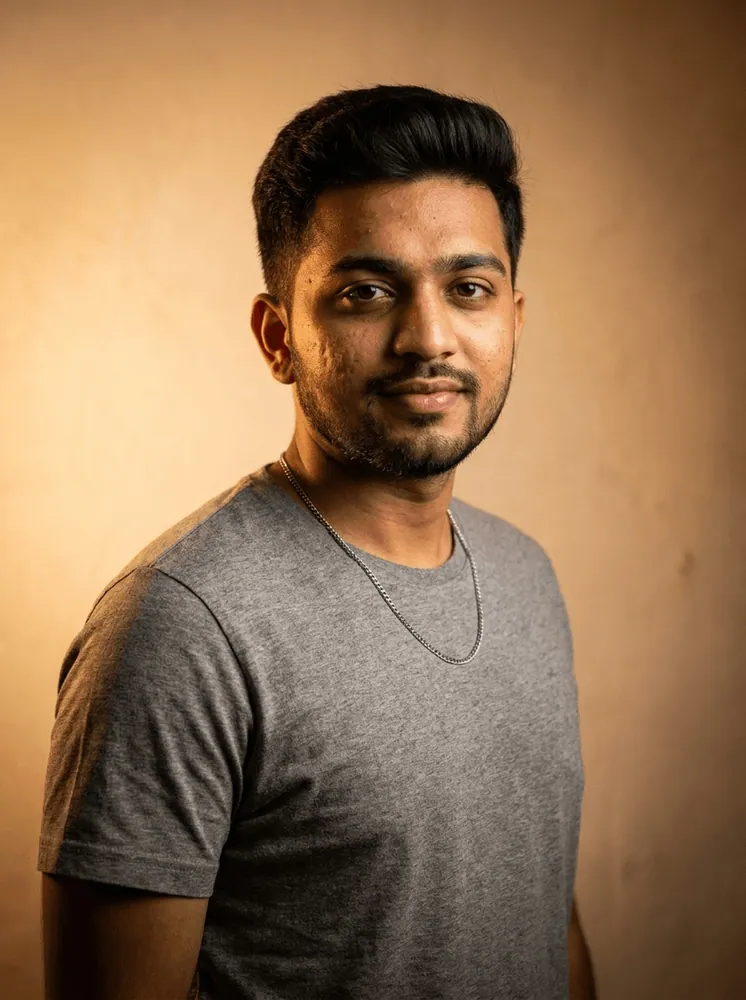
More from Parth.
General Manager · Delhi · 2 posts on the site
Published · Last updated .


