Custom Software Development Company in NYC, Open to Inspection
Before you sign with any software firm, you should know which registered companies stand behind it, where the engineers sit, what arrives each week and how to check every claim without asking the sales team. This page answers each of those for Digital Heroes, and says plainly where we are the wrong choice.
On this page
Who you would be hiring.
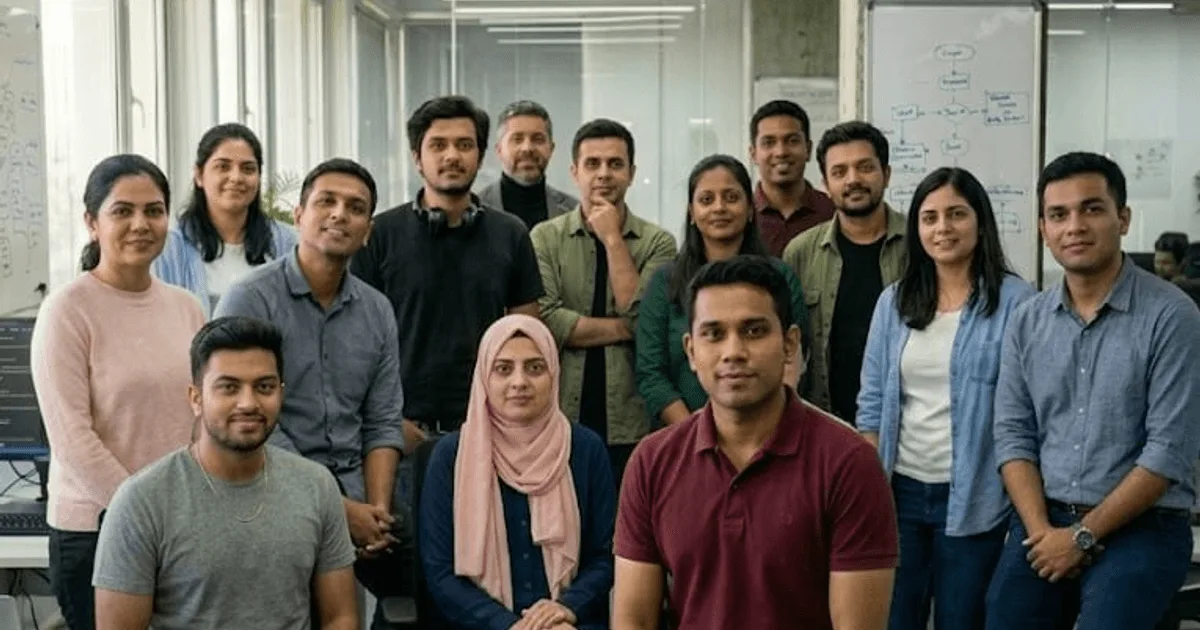
Digital Heroes was founded in 2017 by Prasun Anand and is still run by him. It is registered as Digital Heroes Technologies Pvt Ltd in India and as Digital Heroesco LLC in the US; the contracting entity is the one named in your MSA. By our own count it has 115 people across five offices, with staffed headquarters in New York and Delhi. Engineering is done from Delhi and Lucknow, with some mobile engineers in Sydney; the New York office holds leadership, US account directors and in-person kickoffs. Section 04 shows which of these facts you can check without contacting us, which is the test to put to any custom software development firm on your list.
- legal entities
- Digital Heroes Technologies Pvt Ltd, a private limited company registered in Delhi, India, registered office at Connaught Place, New Delhi 110001. In the US, Digital Heroesco LLC. Your MSA names the one you contract with.
- founded
- 2017, by Prasun Anand, who still leads it as founder and CEO.
- headquarters
- New York: 1140 Broadway, Suite 704, NoMad. Delhi: B-24, Connaught Place. Both are staffed offices.
- people
- 115 across New York, Delhi, London, Lucknow and Sydney. Named profiles are on the team page.
- registrations
- DUNS No. 650878346 with Dun & Bradstreet. Tier 1 supplier status on UNGM, the procurement registry used by UN organisations.
- track record
- 2,000+ brands shipped in 55+ countries. Upwork Top Rated Plus, and public Trustpilot and Clutch profiles.
One contractual point is worth knowing before any call. Under our own terms, nothing said in a sales conversation, a deck or a proposal binds either side until it is written into a countersigned MSA or SOW. You can request the standard MSA early, at legal@digitalheroes.co.in, and reasonable amendments are negotiated before anyone signs.
How an engagement is put together.
A fixed-bid build starts the same way every time: a short call, then a paid discovery sprint that ends in either a fixed price or advice to buy instead. Teams and embedded engineers are bought differently. All six options are below.
-
01 · scoping call
Thirty minutes, free
No slides and no script. If the work suits us, a written scope and quote reach you within 48 hours. If it does not, you hear that on the call, with a pointer to someone better placed.
-
02 · discovery sprint
Two weeks, priced separately
Requirements workshops, a map of each system of record the build touches, a risk register and architecture decision records. It closes with a fixed bid for the build, or with a recommendation to buy a product that already exists.
-
03 · fixed-bid build
One price against one document
Quoted against the requirements discovery produced. An MVP usually takes 8 to 12 weeks; a production platform takes 16 to 28. Work outside the document needs a written change request that states its cost and its effect on the date.
-
04 · dedicated team
A squad on your roadmap
A lead, engineers and QA who own a slice of your product, billed monthly, normally for a quarter or more. Full detail sits on the dedicated development teams page.
-
05 · staff augmentation
Engineers inside your team
People who pass your interview and security checks, then work in your repository and attend your standups, typically inside two weeks. Your roadmap and rituals stay yours. See hiring software developers.
-
06 · retainer
Monthly, after launch
A named team for roadmap work, integrations and incident support once the system is live. The smallest retainer we staff is one senior engineer plus one designer.
What you receive, whichever model you choose
- A written scope, so the agreement never depends on anyone's memory of a call.
- Architecture decision records that explain why each significant choice was made.
- Once build sprints start, a recorded demo of working code each week, with a note of what shipped and what slipped. A week without that demo is a week you are not invoiced for.
- Release notes, and a CI/CD pipeline with automated tests and a way to roll back, in place before the first production release.
- A handover pack: architecture documentation, operating runbooks and a session that transfers knowledge to whoever runs the system next.
- Repositories and cloud accounts held in your name and paid for by you. Our engineers are added as collaborators you can remove.
Who owns what
Under the MSA, the code, designs, copy and custom assets made specifically for your project are assigned to you on full payment. We keep reusable libraries and tooling that existed before your project or were built for general reuse, and the right to show finished work in our portfolio unless you opt out in writing. If you need strict work-for-hire terms with no portfolio rights, that is written into the SOW and priced openly.
What it costs
This page carries no price list, on purpose, because a handful of internal screens and a multi-tenant platform are different purchases. The factors that move the number, and why discovery comes before any fixed figure, are set out in our custom software development cost guide.
Who works on your build.
Most focused builds are staffed by three to five people. A tech lead, a designer and one or two developers form the core, and QA plus project communication are covered inside that small group, often part time. The number that predicts success is not the headcount: it is whether one senior engineer answers for the result and turns up on your calls.
| office | people | what happens there | time zone |
|---|---|---|---|
| New York HQ | 20 | Leadership, account directors, strategy, brand and growth. No engineers sit here. | ET |
| Delhi HQ | 35 | The engineering headquarters: web platform, backend, frontend, mobile, QA, DevOps and site reliability, plus operations and finance. | IST |
| Lucknow | 22 | Full-stack and web developers, project managers, QA and UI/UX design. | IST |
| London | 12 | Client services, strategy, UX research and design for UK and EU accounts. | GMT/BST |
| Sydney | 26 | Product, UX and mobile design, iOS and Android engineers, and APAC client services. | AEST |
On hours: the New York office replies the same day between 9 AM and 6 PM Eastern, Monday to Friday. Engineering in Delhi and Lucknow works hours that face New York, and production emergencies are covered around the clock from Delhi and Sydney, with an after-hours message picked up inside one to two hours.
Engineering answers to our CTO, Divyansh Singh, who works from the Lucknow office and owns the architecture, the engineering standard and the technical calls on custom software builds. Delhi is the engineering headquarters, covering web platform, backend, mobile, QA and DevOps.
Verify us before you sign.
A claim you cannot check is marketing. Every row below names who keeps the record and where to look. Where the record is our own page, the table says so, and you should weigh it accordingly. Run the same checks on every other firm on your shortlist.
| the claim | record held by | how to check it |
|---|---|---|
| A registered company, DUNS No. 650878346 | Dun & Bradstreet | Run the number through the D&B DUNS lookup and compare the name with the party on your MSA, and ask which affiliate signs if they differ. |
| Tier 1 supplier on the UN Global Marketplace | United Nations Global Marketplace | Search the supplier registry at ungm.org. |
| A public Trustpilot profile | Trustpilot | Read every dated review, the critical ones included, on the Trustpilot profile. We cannot edit or remove them. |
| Top Rated Plus on Upwork | Upwork | The profile belongs to our co-founder, Shreyansh Singh. The badge and job success score on his Upwork profile are computed by Upwork from paid contracts. |
| 397 reviews across four Fiverr gigs from clients in 36 countries, captured 3 August 2026 | Fiverr | The profile belongs to our co-founder, Shreyansh Singh. Every review is on his Fiverr profile, with the buyer's country and project size. The profile's own total is higher than our capture, which covered four gigs on one date. |
| Listed by Clutch | Clutch | See the Clutch profile and the listings it shows. |
| 115 people across five offices | Our own team page | This is our record, not a third party's, so weigh it accordingly. Named profiles are on /team/. |
| The company grew out of a YouTube channel teaching ecommerce | YouTube | Watch the channel itself and its back catalogue. |
| A staffed office at 1140 Broadway, Suite 704 | A street address | Hold your kickoff there. Details are on the New York office page. |
| Named client results | Our own case studies | Single-client case studies name the client with written consent, for example Emani and Noble Paris. Pages marked archetype are composites with illustrative names, so do not treat them as references. Our terms treat all results as illustrative, not as a promise for your project. |
| Anything a salesperson tells you | Your SOW | If it matters, ask for it as a clause with an acceptance criterion. Until then it binds nobody, and our terms say exactly that. |
The same lookups, with a note on what each credential means, are collected on our credentials page.
Against a freelancer, a body shop or a big consultancy.
Each kind of vendor is the right answer for somebody. The bottom row matters most, because it lists where each one goes wrong, ours included. These are our judgements from the work we see, not measured benchmarks.
| Question | freelancer | offshore body shop | large consultancy | digital heroes |
|---|---|---|---|---|
| Who you talk to weekly | The person writing the code. | An account manager relaying to whoever is free on the bench. | A partner at the pitch, then a delivery manager and a changing team. | A senior tech lead who knows the code, plus a recorded demo every week. |
| What you are buying | One person's hours. | Hours from a pool, usually billed per head. | A programme, with governance, change management and on-site presence. | A fixed bid after discovery, or a monthly team with a named lead. |
| If a key person leaves | The work stops until you find someone new. | A replacement arrives; your context often does not. | Continuity holds, and you pay for the layers that provide it. | Decision records, runbooks and a repository in your account let the next engineer start from documents. |
| Best fit | One bounded job in a single discipline. | Tightly specified tickets reviewed by your own senior engineers. | Multi-year transformation with a large bench and heavy procurement. | A defined build or roadmap needing engineering and design owned end to end, with Eastern Time overlap. |
| Does not fit | Projects needing backend, design, QA and delivery management in parallel. | Buyers with no engineer of their own to check the output. | Budgets where the overhead would outweigh the build. | Scopes below one senior engineer plus one designer, ideas without validated demand, or teams that need every engineer in a US office. |
Most of our engineers work in India, so on a map we look like an offshore vendor. The test we would ask you to apply is not geography. It is whether one accountable lead owns your build, whether working software is shown to you weekly, and whether the code lives in accounts you control. Hold us and every other shortlisted firm to those three.
Still building the shortlist? Two guides written by our team cover the selection process itself: how to choose a software development company and choosing a custom software firm without getting burned.
What we build.
This page is about the company. The work itself is described on the pages below, one per kind of system.
Hiring from New York, stated plainly.
If you want a custom software development company with New York headquarters, here is exactly what that means with us. The company is headquartered at 1140 Broadway, Suite 704, in NoMad, and that is where our leadership and US account directors sit. Your code is not written there. The 20 people in the New York office cover leadership, account direction, strategy, brand and growth; the engineers work from Delhi and Lucknow, and some of our mobile engineers sit in Sydney.
We spell that out because implying a Manhattan engineering floor would be exactly the kind of claim this page asks you to test. What a New York client does get is real: kickoffs, design reviews and launch-week sessions in person at NoMad or at your office, with no travel line on the quote; a team on Eastern Time that answers the same day on weekdays; and emergency cover from Delhi and Sydney outside those hours. For US-anchored engagements the MSA typically defaults to New York law and a New York venue.
Visit the New York office page for the address, hours and how in-person sessions work.
When to hire someone else.
Saying no early is cheaper for both sides than a project that should never have started. These are the situations where we will tell you to look elsewhere.
The scope is smaller than our floor.
We do not staff work below one senior engineer plus one designer, because the arithmetic fails for both parties. On the call we will suggest a freelancer or a smaller agency instead.
Nobody has shown they want the product yet.
A pre-revenue concept without validated demand should be tested more cheaply than a custom build. We will say that during the first conversation.
A product you can buy already does the job.
Plenty of requests are better served by configuring software that exists. Discovery is designed to reach that verdict when it is the true one, and we will name the tool.
Every engineer must be in the United States.
Our engineers are in India and Australia. If your contract, security policy or preference requires US-based engineers, we are the wrong firm.
You want a very large bench from week one.
A programme that needs several dozen engineers from the first week is what large consultancies are built for, and a better match for them than for a 115-person company.
You want the spec built with no questions asked.
We push back on requirements that will cost you later. If you would rather a vendor typed exactly what the ticket says, a cheaper shop will suit you better.
Your first 30 days.
This is how the opening month runs on a fixed-bid build. By day 30 you should hold a written scope, the architecture records, a fixed price or a documented reason not to build, and, if the build has started, your first recorded demo.
-
before day 1
The call
Calls are booked at least five days out so the discovery lead can read your current product, the repository if you share it, and your documents first. A same-week slot is possible on request. The written scope and quote follow within 48 hours of the call.
-
days 1 to 14
Discovery
Requirements workshops, the system map, the risk register and the first architecture decision records. Security starts here too: a threat model, a data-flow diagram and a review of how secrets are handled all land inside these two weeks. New York clients get an in-person kickoff at NoMad or at their office.
-
around day 14
The decision
You receive a fixed bid for the build against the written scope, or a recommendation to buy instead. Because discovery is priced on its own, you can stop here with the documents in hand, without having committed the build budget.
-
days 15 to 30
First sprints
Sprints run one to two weeks, and the first recorded demo of working code arrives at the end of the first build sprint, with its shipped and slipped note. The work is delivered into repositories and cloud accounts held in your name, on your billing.
Questions buyers ask about the company.
Which legal entity signs our contract?
The one named in the MSA itself. Digital Heroes is registered as Digital Heroes Technologies Pvt Ltd in India, a private limited company with its registered office at Connaught Place, New Delhi 110001, and as Digital Heroesco LLC in the US. Our terms define Digital Heroes as the legal entity operating under DUNS No. 650878346 and its affiliates that share that registration. Ask which entity will sign before the draft reaches you, and check that name against the DUNS record before you sign. US-anchored engagements typically default to New York law and venue, and alternatives such as Delaware, England and Wales, Singapore, or JAMS or LCIA arbitration can be negotiated.
What does the IP clause actually assign to us?
On full payment, the default assignment covers everything made specifically for your project: the code, the designs, the copy and any custom assets we commission. We keep components, libraries and toolchains that existed before your project or were built for reuse across clients, anonymised aggregate metrics, and our internal methods. We may also show finished work in our portfolio unless you opt out in writing. If you need full work-for-hire treatment with no portfolio rights, the SOW can say so and the price will reflect it.
Where will the engineers on our build be based?
In Delhi and Lucknow, working hours that face New York, with iOS and Android engineers also in Sydney. Nobody on the engineering side is in the New York office, which holds leadership, account directors, strategy, brand and growth. The table in section 03 lists every office with its headcount and time zone.
Can we read your MSA before we commit to anything?
Yes. Ask your contact for the current standard MSA, or email legal@digitalheroes.co.in. Reasonable amendments are negotiated before signing; after signing, changes need a written change order. We do not accept purchase-order terms that conflict with the MSA unless an authorised officer acknowledges them in writing, so raise any procurement terms early.
What is the smallest engagement you accept?
For ongoing work, one senior engineer plus one designer on a monthly retainer. Scoped builds are fixed-bid, with the typical durations shown in section 02. If what you need is smaller than that, you will hear it during the first call, along with a suggestion to use a freelancer or a smaller agency instead of stretching a team to fit.
What if discovery concludes we should not build at all?
Then that is the recommendation you get, with the tool named. Discovery is priced as its own piece of work so that you can act on a buy verdict without having committed the build budget. You keep the written scope and the system map either way.
Who responds if production fails outside New York hours?
The Delhi and Sydney offices, which cover production emergencies at any hour between them. An after-hours message is picked up within one to two hours whatever the clock says. Inside business hours, the New York team replies the same day, 9 AM to 6 PM Eastern, Monday to Friday.
Are the results in your case studies a promise for our project?
No, and our terms say so. Figures in case studies and on service pages describe what happened in specific situations. The only commitments that bind us are the ones written into an executed SOW with an acceptance criterion attached. If an outcome matters to you, put it there.
Is custom software a core practice or a side line for you?
We also run Shopify, brand and growth practices, so it is a fair question. Custom software sits with the engineering organisation, which answers to our CTO, Divyansh Singh. He owns the architecture, the engineering standard and the technical calls on custom software, SaaS and commerce builds. Most of the engineers work from the Delhi engineering headquarters and the Lucknow office.
Checked us out? Now test us on a call.
Bring the hardest question on your vendor checklist. You leave with a straight answer, and within 48 hours a written scope if the work suits us.
Why work with Digital Heroes









115 people across five studios in New York, Delhi, London, Sydney and Lucknow, shipping ecommerce, web, software and mobile work for founder-led brands. Senior engineers only, no account-manager relay, and the same team from kickoff to launch.
- Shopify Premier Partner, the tier Shopify reserves for agencies with a sustained delivery record on Plus builds
- Tier 1 registered supplier on the United Nations Global Marketplace, which requires audited company documentation
- Top Rated Plus on Upwork, the bracket for the top 3% of talent by client outcomes
- 397 public five-star-weighted reviews across four Fiverr gigs, from clients in 36 countries
- DUNS verified business, No. 650878346, so procurement can check us before signing
- Listed by Clutch in Top 1000 Global B2B Companies and Top Web Designers 2024
- Verified profiles on GoodFirms, DesignRush, Digital.com, AppFutura and TopDevelopers
- 2,000+ brands built across 55+ countries, with $50M+ in client revenue scaled
More from Naomi.
Senior Account Director · Enterprise · New-york · 6 posts on the site
Published · Last updated .


