Custom Software Development in the USA
A US company can staff a custom build four ways: an onshore team, a nearshore team in Latin America, an offshore team in Europe or Asia, or a hybrid with US management and offshore engineers. Here they are compared on cost, shared hours, code ownership and where the data lives, from public data, with a plain note on which one we are.
On this page
Four ways to staff a build from the US.
Onshore buys the most shared hours and the simplest contract at the highest price: BLS data puts the median US software developer's wage at $135,980 for May 2025, before benefits. GoodFirms places nearshore teams in Brazil, Argentina, Mexico and Colombia in its $20 to $50 an hour band, against $100 to $250 for US firms on enterprise work. A 9 to 6 day in India shares no hours with New York or Los Angeles.
A hybrid puts US managers in front of an offshore team, so you contract and meet in the US while the engineering is priced abroad. That is how Digital Heroes works, with leadership in New York and engineers in Delhi and Lucknow. Price matters less than four questions: must engineers be US persons, how many live hours you need, who on your side reviews the code, and where the data must stay.
| Question | onshore | nearshore | offshore | hybrid |
|---|---|---|---|---|
| Where the engineers sit | In the US: your own hires, or a US agency. | Latin America, for example Mexico, Colombia, Brazil or Argentina. | Eastern Europe, South Asia or Southeast Asia, for example Poland, India or the Philippines. | Managers in the US, engineers offshore. With us: New York, then Delhi and Lucknow. |
| Agency rate per hour | $100 to $250 for enterprise work; $50 to $100 for mid-tier developers in cities such as Chicago and Austin; above $250 at boutiques in Silicon Valley, New York City and Boston. | $20 to $50 in Brazil, Argentina, Mexico and Colombia; $50 to $100 in Chile and Costa Rica. | Under $20, or $20 to $50, in South Asia; $20 to $50 in Eastern Europe and Southeast Asia. | Set by each vendor. For a build, ours is one fixed bid after a priced discovery sprint, not an hourly rate. |
| Office hours shared with New York | 6 to 9 a day across the 48 contiguous states, by time zone. | 7 to 9 from Mexico City or Bogotá; 7 to 8 from São Paulo. | 2 to 3 from Eastern Europe; none from India or Manila unless one side moves its day. | The US office covers your day; the engineering window comes from shifted hours. |
| How the code becomes yours | An employee's work is yours by law; a US agency assigns its work to you in a signed contract. | The vendor's home law decides who owns it first; a signed assignment then passes it to you. | The same, and in India an assignment silent on term or territory lasts five years and covers India only. | As offshore: the chain runs through the company that employs the engineers. |
| Where the data can live | Any US cloud region, read from inside the US. | Any US cloud region, read from abroad. | Any US cloud region, read from abroad. | Any US cloud region, read from abroad by the engineers. |
| Best fit | US persons only contracts, export controlled work, or all-day pairing with your own engineers. | Teams that want most of the day live without paying US rates. | Well specified work with a US product owner who reviews it every week. | Buyers who want a US contract and US meetings, a fixed price, and offshore engineering. |
| Does not fit | A first version on a tight budget. | Pacific coast teams pairing with São Paulo or Buenos Aires, where the shared day falls to 4 or 5 hours. | Buyers with nobody to write the requirements or check the code. | Contracts that need every engineer in the US. That rules us out too. |
Rate bands are from GoodFirms' 2026 survey and the hours from the table in section 03; both are explained below. The cells are our summary of those sources, not measured results from any vendor.
What custom software development costs in the USA, by model.
Start with the in-house benchmark. The median US software developer earned $135,980 a year in May 2025, or $65.38 an hour, according to the Bureau of Labor Statistics Occupational Outlook Handbook. The same wage survey counted 1,687,890 software developers on payrolls, put the mean at $148,100, and found the middle half earning between $105,210 and $171,980.
Wages are not the whole cost of a hire. In June 2026, wages made up 69.2 percent of what private employers spent on professional workers, by the BLS Employer Costs for Employee Compensation survey. Divide the median by that share and a typical developer costs about $196,500 a year, or $94 an hour, before recruiting, equipment and the months spent hiring.
| Metro area | Median wage a year | Per hour | Per hour with benefits |
|---|---|---|---|
| United States, all areas | $135,980 | $65 | $94 |
| San Jose | $213,110 | $102 | $148 |
| San Francisco | $186,640 | $90 | $130 |
| Seattle | $167,280 | $80 | $116 |
| New York | $166,830 | $80 | $116 |
| Boston | $166,090 | $80 | $115 |
| Chicago | $134,380 | $65 | $93 |
| Austin | $134,120 | $64 | $93 |
| Atlanta | $132,960 | $64 | $92 |
Wages: BLS Occupational Employment and Wage Statistics for software developers, May 2025, read through the BLS data query system. The two hourly columns are our arithmetic, rounded to the dollar.
Agency rates by model, and what 1,000 hours costs
Agencies price by the hour or by the project. GoodFirms surveyed over 100 software firms in the fall of 2025 for its 2026 cost survey, and it names the regions behind each hourly band. Below, those bands sit beside the four models and are multiplied by 1,000 hours, a round figure for comparison and not an estimate of your build.
| Model | Where GoodFirms places the band | Per hour | 1,000 hours |
|---|---|---|---|
| Offshore, South Asia | India, Bangladesh, Pakistan | Under $20, or $20 to $50 | Under $20,000, or $20,000 to $50,000 |
| Offshore, Europe and Southeast Asia | Ukraine, Poland, Romania, Serbia; Vietnam, the Philippines, Indonesia | $20 to $50 | $20,000 to $50,000 |
| Nearshore | Brazil, Argentina, Mexico, Colombia | $20 to $50 | $20,000 to $50,000 |
| Nearshore, upper band | Chile, Costa Rica | $50 to $100 | $50,000 to $100,000 |
| Onshore, mid-tier | US developers at mid-tier rates, for example in Chicago or Austin | $50 to $100 | $50,000 to $100,000 |
| Onshore, enterprise | US and Canadian firms | $100 to $250 | $100,000 to $250,000 |
| Onshore, boutique | Silicon Valley, New York City, Boston | Above $250 | Above $250,000 |
| A US hire, for reference | The BLS median, with benefits | About $94 | About $94,000 |
One cost sits outside every rate: the hours your own people spend writing requirements, answering questions and accepting work. It rises as shared hours fall, because more of it has to be written down, which is why a cheaper hourly band does not always produce a cheaper build. A hire also bills for every working hour of the year, busy or not.
What a hybrid build costs with us
We price a build as one figure, set after discovery, rather than by the hour. A focused first version of custom software typically costs $40,000 to $150,000, a complex enterprise platform $250,000 to $500,000 or more, and a SaaS MVP $30,000 to $80,000. Where your price lands depends on scope, integrations, security and data migration, and the two-week discovery sprint is priced separately.
Two free calculators take your own figures: the offshore development cost calculator prices one set of build hours at offshore, nearshore and US rates, while the in-house vs agency calculator sets a hire against an agency. Our page on what drives custom software cost explains what pushes a budget up or down.
The working hours each model shares with New York and Los Angeles.
Shared hours decide how much of a project can be talked through instead of written down. The table assumes both sides keep a 9 to 6 day in their own time zone, with offsets from the IANA time zone database, and counts the hours left in common, once for US daylight time and once for US standard time.
| Team in | Model | New York, Mar to Nov | New York, Nov to Mar | Los Angeles, Mar to Nov | Los Angeles, Nov to Mar |
|---|---|---|---|---|---|
| Chicago or Austin | Onshore | 8 | 8 | 7 | 7 |
| Mexico City | Nearshore | 7 | 8 | 8 | 7 |
| Bogotá | Nearshore | 8 | 9 | 7 | 6 |
| São Paulo or Buenos Aires | Nearshore | 8 | 7 | 5 | 4 |
| Warsaw | Offshore | 3 | 3 | 0 | 0 |
| Bucharest | Offshore | 2 | 2 | 0 | 0 |
| Delhi or Lucknow | Offshore | 0 | 0 | 0 | 0 |
| Manila | Offshore | 0 | 0 | 0 | 1 |
Two patterns stand out. Latin America keeps most of an East Coast day all year, because Mexico City, Bogotá, São Paulo and Buenos Aires do not change their clocks and all sit within two hours of New York.
From India, a 9 to 6 day shares nothing with New York or Los Angeles: a 10 AM stand-up in New York is 7:30 PM in Delhi from March to early November, and 8:30 PM in winter. Manila shares nothing with New York either, and one hour with Los Angeles in winter.
Europe and the US also change their clocks on different Sundays, so for a few weeks each spring and fall the European overlap grows by an hour until both sides have changed.
How a hybrid team makes a window
With no overlap by default, an India based team has to move its day, and the contract should say whose day moves. With us, the New York office answers the same business day from 9 AM to 6 PM Eastern, Monday to Friday, and our engineers in Delhi and Lucknow keep hours shifted toward New York. At other hours, production emergencies go to Delhi or Sydney, and messages sent after hours are picked up inside one to two hours.
The rest runs on documents rather than calls: a written scope, a decision record for each significant technical choice and, from the first sprint, a weekly recorded demo of working software, with a short list of what shipped and what slipped. To test a vendor's city against yours, the free time zone planner shows the 9 to 6 hours they have in common.
Who owns the code, under US law and the vendor's.
Under the US Copyright Act, copyright belongs first to the author. The exception is a work made for hire: code an employee writes as part of the job belongs to the employer, and a commissioned work qualifies only if it falls in one of nine categories in 17 U.S.C. § 101 and both sides sign an agreement saying so, as the Copyright Office's Circular 30 explains.
A custom application is not one of those categories in its own right, so contracts with outside developers add a written assignment. Section 204(a) makes a copyright transfer invalid unless it is in writing and signed by the owner. Who counts as an employee is a question of agency law, the Supreme Court held in Community for Creative Non-Violence v. Reid, so directing a contractor's work does not make them one.
How the code reaches you under each model
| Who writes it | Who owns it first | What moves it to you |
|---|---|---|
| Your US employee | You, as a work made for hire, for work within the job | Nothing more, so define the job in writing: work outside it is not covered |
| A US freelancer | The freelancer | A signed assignment under section 204(a) |
| A US agency | The agency, for its employees' work | An assignment in the MSA, plus a warranty that its subcontractors signed theirs over |
| A nearshore or offshore vendor | Whoever the vendor's home law names, usually the vendor for its employees' work | An assignment that works under that law as well as US law |
| A hybrid vendor | The company that employs the engineers, even when a US company signs | The same, so ask which entity employs the engineers and which one assigns to you |
India shows why the foreign link matters. Section 17 of its Copyright Act, 1957 makes an employer the first owner of what an employee creates under a contract of service, and section 19 treats an assignment that states no term as lasting five years, and one that states no territory as covering India only.
In Pine Labs v. Gemalto (2011), a Delhi High Court bench hearing an appeal at the injunction stage held that both defaults applied to a software assignment that named neither.
Four clauses to ask for, whichever model you pick
- A present assignment, worded "assigns" rather than "will assign", of the code, designs and documents written for you, worldwide and for the full term of copyright.
- A warranty that every engineer and subcontractor on the work has already signed their rights over to the vendor.
- A list of what the vendor keeps, such as libraries and tools it owned before your project, with a license that lets your system keep running.
- The governing law and the forum for disputes, chosen with your own lawyer, who can tell you whether arbitration suits a vendor whose assets sit abroad.
Our own terms
Our MSA hands you the code, designs, copy and other assets created for your project once the final invoice is paid. What we keep is the tooling and libraries we had before you, or built to reuse across clients. You can also keep your project out of our portfolio by saying so in writing, or buy a pure work for hire contract with no portfolio rights, at a price set in the SOW.
Your MSA names which of our two registered companies you contract with: Digital Heroesco LLC in the US or Digital Heroes Technologies Pvt Ltd in India. US engagements typically default to New York law and a New York venue, with Delaware, England and Wales, Singapore, or JAMS or LCIA arbitration open to negotiation. Under our terms, a promise made in a sales call commits nobody until it appears in a countersigned MSA or SOW.
Keeping the data in US cloud regions while engineers work abroad.
Where data is stored and where it is read from are separate questions. Storage follows the region chosen in the cloud account, and every major provider offers several inside the US. Access follows whoever holds credentials. An offshore team can work on a system whose data never leaves a US region, but any engineer who can read production data reads it from their own country.
| Provider | US regions | Note |
|---|---|---|
| AWS | US East (N. Virginia) and (Ohio); US West (N. California) and (Oregon) | The two AWS GovCloud (US) regions, East and West, need a separate GovCloud account. |
| Microsoft Azure | East US and East US 2 (Virginia), Central US (Iowa), North Central US (Illinois), South Central US (Texas), West Central US (Wyoming), West US (California), West US 2 (Washington), West US 3 (Phoenix) | Azure Government regions sit in a separate sovereign cloud. |
| Google Cloud | Iowa, South Carolina, Northern Virginia, Columbus, Dallas, Oregon, Los Angeles, Salt Lake City, Las Vegas | Nine regions, us-central1 to us-west4. |
| Supabase | East US (North Virginia) and (Ohio); West US (North California) and (Oregon) | Hosted PostgreSQL, the database in our usual stack. |
Where an offshore or hybrid team cannot work
Export controlled technical data.
Under the ITAR, releasing technical data to a foreign person is itself an export, even inside the US: 22 CFR 120.50 calls it a deemed export. Work on that kind of data belongs with an onshore team of US persons.
Contracts that require US based staff.
If your customer contract or security policy says the engineers must be in the US, offshore and hybrid teams are out, and that includes us. Read those clauses before you compare a single price.
Vendors tied to countries of concern.
The Justice Department's Data Security Program, in effect since April 8, 2025, restricts vendor, employment and investment agreements that give a country of concern or a covered person access to government-related data or bulk US sensitive personal data, unless CISA's security requirements are met (28 CFR 202.401). The six countries are China, Cuba, Iran, North Korea, Russia and Venezuela. Ask every vendor where its subcontractors sit.
Health data, without a signed agreement.
HIPAA lets a covered entity give protected health information to a vendor only with written assurances, normally a business associate agreement (45 CFR 164.502(e)). We sign one whenever we handle it, and when we build for healthcare, hosting is AWS, Azure or Google Cloud, each covered by that provider's own BAA.
On our builds, the repositories and the cloud account belong to you and sit on your bill, which makes the region your decision; our engineers work in them as collaborators you can take off at any time. Who sees which record is enforced in the database with row-level security and roles, and an audit log records who changed which record and when.
How Digital Heroes runs New York plus Delhi.
We are the fourth model, so this is what it looks like from inside. Our headquarters, 1140 Broadway, Suite 704 in NoMad, holds 20 people by our own count, who handle leadership, US account direction, strategy, brand and growth. The engineers work from our engineering headquarters in Delhi and from the Lucknow office, and some of our iOS and Android engineers sit in Sydney.
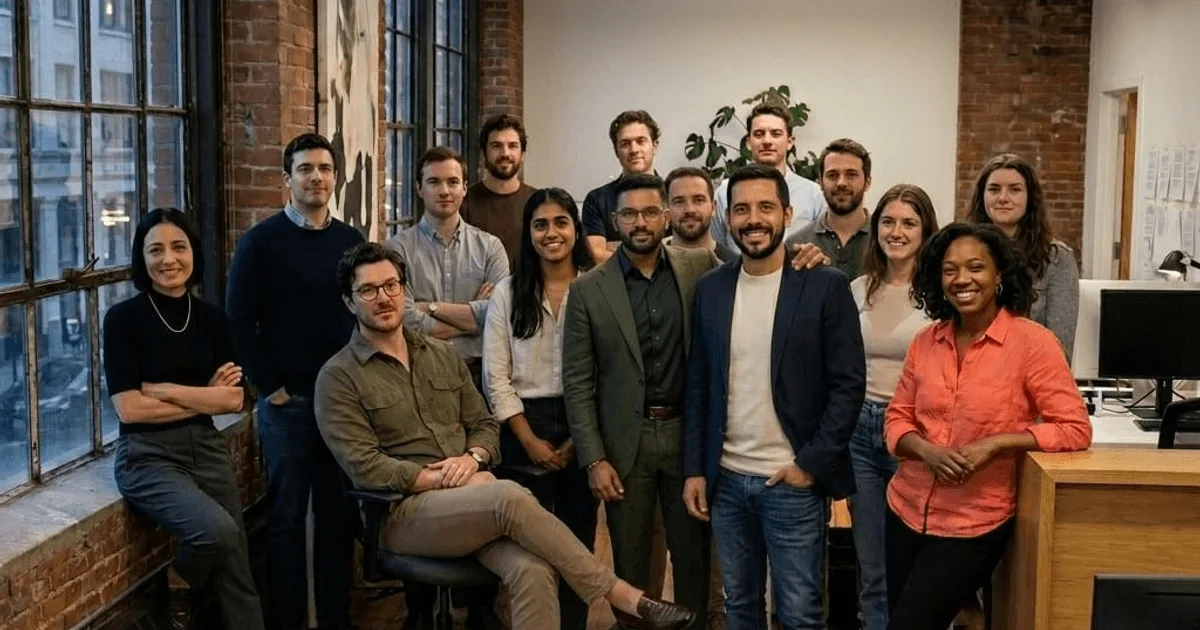
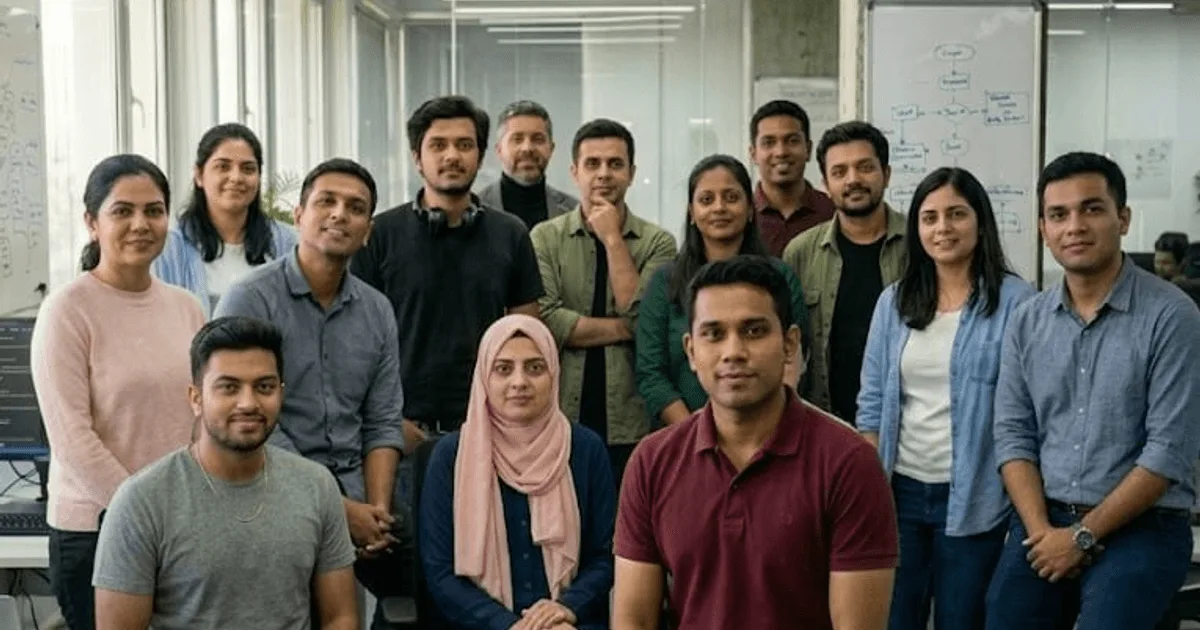
What the US side gives you: a US company to sign with, Digital Heroesco LLC, when your MSA names it; a senior tech lead who knows the code and joins your calls, with a recorded demo each week; and, for New York clients, in-person kickoffs, design reviews and launch week sessions at NoMad or your office, with no travel line on the quote. The offshore side gives you an in-house engineering team and one fixed price set after discovery.
Our CTO, Divyansh Singh, sets the architecture and the engineering standard from the Lucknow office. Most focused builds get three to five people, usually one tech lead, one designer and a developer or two, who also cover QA and project communication between them. An MVP typically runs 8 to 12 weeks, and a production platform 16 to 28.
Three builds by this team, each shown with the client's permission and without a results figure: AirTrainr's athlete and trainer mobile apps, for a sports training marketplace serving the USA and Canada, in React Native and Expo on Supabase; Planivo, workforce planning software for clinics and hospitals that we built whole in 2026; and SpeedyPrint, a South African web to print store on Next.js 15 and Supabase.
Clients rate us 5.0 from 66 verified reviews on Clutch (checked 13 October 2026). Before you sign, check us the way you would check anyone: our custom software development company page lists each claim with who holds the record, and the New York office page explains how in-person sessions work.
Which model fits: six questions to settle it.
Answer these in order. The first two can end the decision on their own; the rest narrow it.
1. Must every engineer be a US person, or based in the US?
Then the answer is onshore, and the rest of this list does not apply.
2. Do your own engineers need to pair with the vendor's most of the day?
Onshore or nearshore. An East Coast team keeps 7 to 9 shared hours with Mexico City or Bogotá; a West Coast team keeps the most with Mexico City.
3. Can someone on your side write requirements and review code every week?
If not, avoid a pure offshore team, where the written handoff is most of the relationship. A hybrid or onshore team carries more of that load.
4. Is the budget fixed before the scope is?
In any model, ask for a fixed price after a paid discovery sprint. An hourly band only tells you what time costs, not what the system costs.
5. Does the data carry legal limits?
Check export controls, staffing clauses, the Justice Department's countries of concern and HIPAA, as set out in section 05, before you compare prices.
6. Do you want a US contract and US meetings, with offshore engineering?
That is the hybrid model, and it is what we sell.
Hire someone other than us if your contract requires US based engineers, if the scope cannot support one senior engineer plus one designer, or if the work needs several dozen engineers from day one. An onshore firm or a large consultancy suits those better.
For named firms, our ranked lists of software development companies in the USA and custom software development companies in the USA compare named firms, including where their engineers sit when a firm says so, with ourselves included and disclosed. How we run sprints across the ocean is on our offshore software development page.
Questions US buyers ask about where software gets built.
What is the typical hourly rate for custom software development in the USA?
For US and Canadian firms on enterprise work, $100 to $250 an hour is the band GoodFirms' 2026 survey reports. Boutique firms in Silicon Valley, New York City and Boston charge more than $250, and mid-tier developers in cities such as Chicago and Austin $50 to $100. An employee costs less per hour but is paid for every hour: the BLS median wage of $65.38 comes to about $94 with benefits.
How much does it cost to develop custom software?
Scope, integrations, security and data migration move the price far more than location does. With us, a focused first version typically costs $40,000 to $150,000 and a complex enterprise platform $250,000 to $500,000 or more. Hourly bands help you compare vendors, which is why the cost section multiplies each one by the same 1,000 hours.
How can I develop my own custom software?
Three routes. Hire developers and manage them yourself, at about $196,500 a year each for a median US developer with benefits. Commission a team onshore, nearshore, offshore or hybrid, with a written scope and the code assigned to you. Or, for a simple internal tool, try a no-code product first; if it covers the process, you may not need custom software at all.
Is an offshore team really cheaper than a US one?
Per hour, yes: GoodFirms finds firms in South Asia and Eastern Europe in the $20 to $50 band and below, against $100 to $250 for US firms on enterprise work. Per project, the gap narrows when nobody on your side can write clear requirements or review code, because questions wait a day for an answer. Compare fixed prices for the same written scope, not hourly rates.
Does the code an offshore company writes belong to us?
You do only if the contract says so. The vendor first has to own what its engineers write under its own country's law, then assign it to you in a signed document. With an Indian vendor, make the assignment worldwide and for the full term of copyright, because section 19 of India's Copyright Act otherwise limits a silent assignment to five years and to India.
Can our data stay in the US if the developers are in India?
Yes. Storage follows the region chosen in the cloud account, and AWS, Azure, Google Cloud and Supabase all offer US regions. What changes is access: an engineer who can read production data reads it from India. Check your own contracts for clauses on where staff may sit, because ITAR controlled data and contracts that require US based staff rule it out.
What is the difference between nearshore and offshore development?
Mostly the clock. For a US company, nearshore usually means Latin America, where Mexico City, Bogotá and São Paulo share 7 to 9 working hours with New York. Offshore means Europe or Asia: 2 to 3 hours shared with New York from Poland or Romania, none from India or the Philippines. The rates overlap more than the labels suggest, since GoodFirms puts parts of both in the $20 to $50 band.
How do you work with a team that shares none of your office hours?
Agree in writing whose day moves, then lean on documents more than meetings: a written scope, a short daily note of what changed and a recorded demo each week. Hold live reviews in the window you agreed, early in your morning if you are on the West Coast. With us, the New York office covers your business day and the engineers shift their hours toward it.
Last reviewed .
Talk the sourcing decision through with a tech lead.
Bring the scope, where your users and data sit, and any contract clauses about staff location. The first call takes 30 minutes and costs nothing. When the work suits us, you get a written scope and quote within 48 hours; when another model or another firm fits better, you hear that on the call.
Why work with Digital Heroes









115 people across five studios in New York, Delhi, London, Sydney and Lucknow, shipping ecommerce, web, software and mobile work for founder-led brands. Senior engineers only, no account-manager relay, and the same team from kickoff to launch.
- Shopify Select Partner, as listed in the Shopify Partner Directory
- Tier 1 registered supplier on the United Nations Global Marketplace, which requires audited company documentation
- Top Rated Plus on Upwork, the bracket for the top 3% of talent by client outcomes
- 397 public five-star-weighted reviews across four Fiverr gigs, from clients in 36 countries
- DUNS verified business, No. 650878346, so procurement can check us before signing
- Listed by Clutch in Top 1000 Global B2B Companies and Top Web Designers 2024
- Verified profiles on GoodFirms, DesignRush, Digital.com, AppFutura and TopDevelopers
- 2,000+ brands built across 40+ countries, with $50M+ in client revenue scaled

More from Shreyansh.
Co-Founder · Lucknow · 27 posts on the site
Published .


