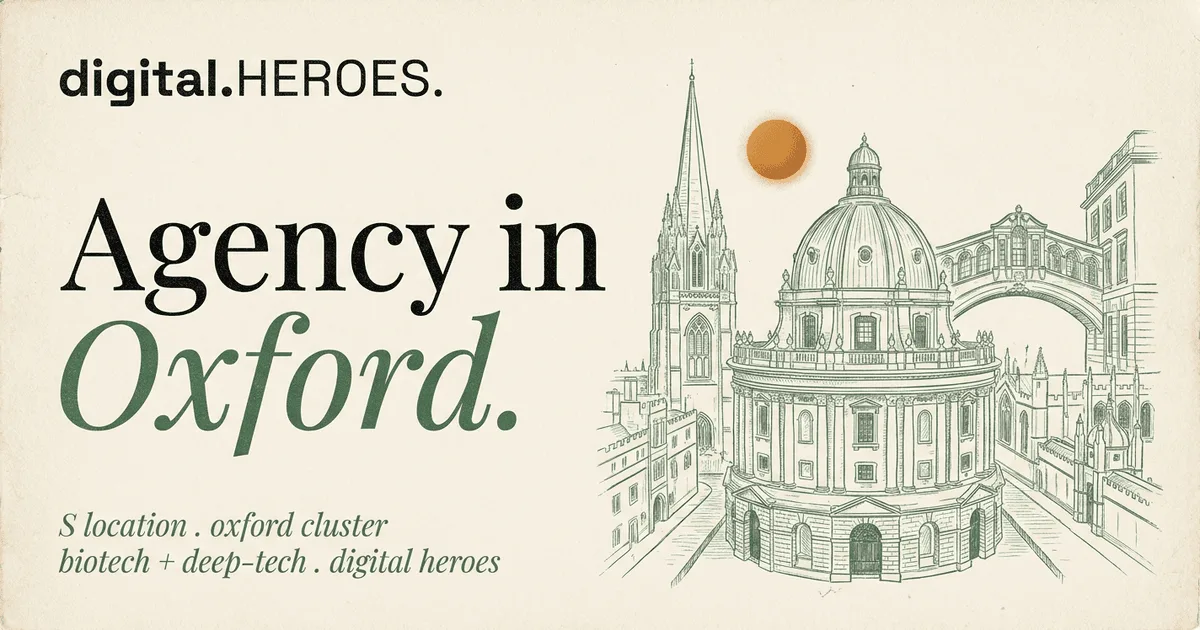
Where Oxford's companies actually sit.
Little of Oxford's company activity happens among the colleges. It is spread across a ring of science and business parks, several of them well outside the ring road, and each has a character of its own.
Harwell Campus, south of the city near Didcot, is home to the Diamond Light Source synchrotron, the ISIS Neutron and Muon Source and a space cluster that includes the European Space Agency's ECSAT centre. More than 6,000 people work there across over 240 organisations (Harwell Science and Innovation Campus).
Milton Park, a few miles from Harwell, says it hosts more than 280 companies and over 9,000 people, many of them in laboratories and life sciences (Milton Park).
The Oxford Science Park, majority owned by Magdalen College, and Begbroke Science Park, run by the university, keep younger companies close to the departments they came from. Headington adds the John Radcliffe Hospital and the university's medical research campus, and Cowley adds the BMW Group plant that builds the MINI, the city's best known factory.
For a website the map matters in one practical way. The people reading are scientists, clinicians, procurement officers and investors. They want data sheets, regulatory status and a named contact. A storefront built for impulse buying fails them, and so does a marketing site that hides the specifications behind a demo form.
Our usual toolkit for this work is Next.js hosted on Vercel, a headless CMS your scientists can edit themselves, Figma for design and GitHub for code you own from the first commit. Marketing pages are held to Google's Core Web Vitals thresholds, which ask for the main content to render within 2.5 seconds.