Quick Answer
What Is App Development Outsourcing?
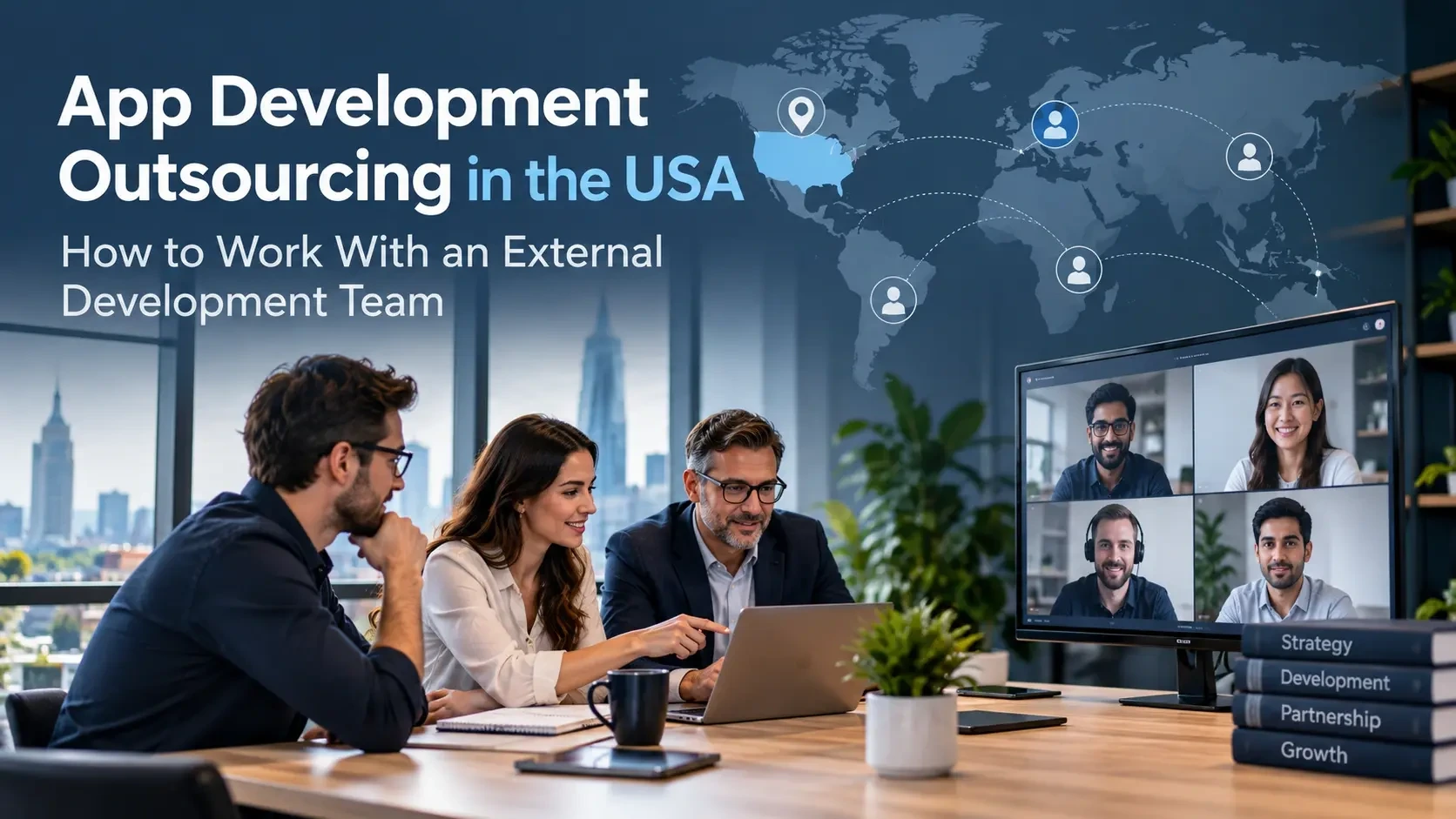
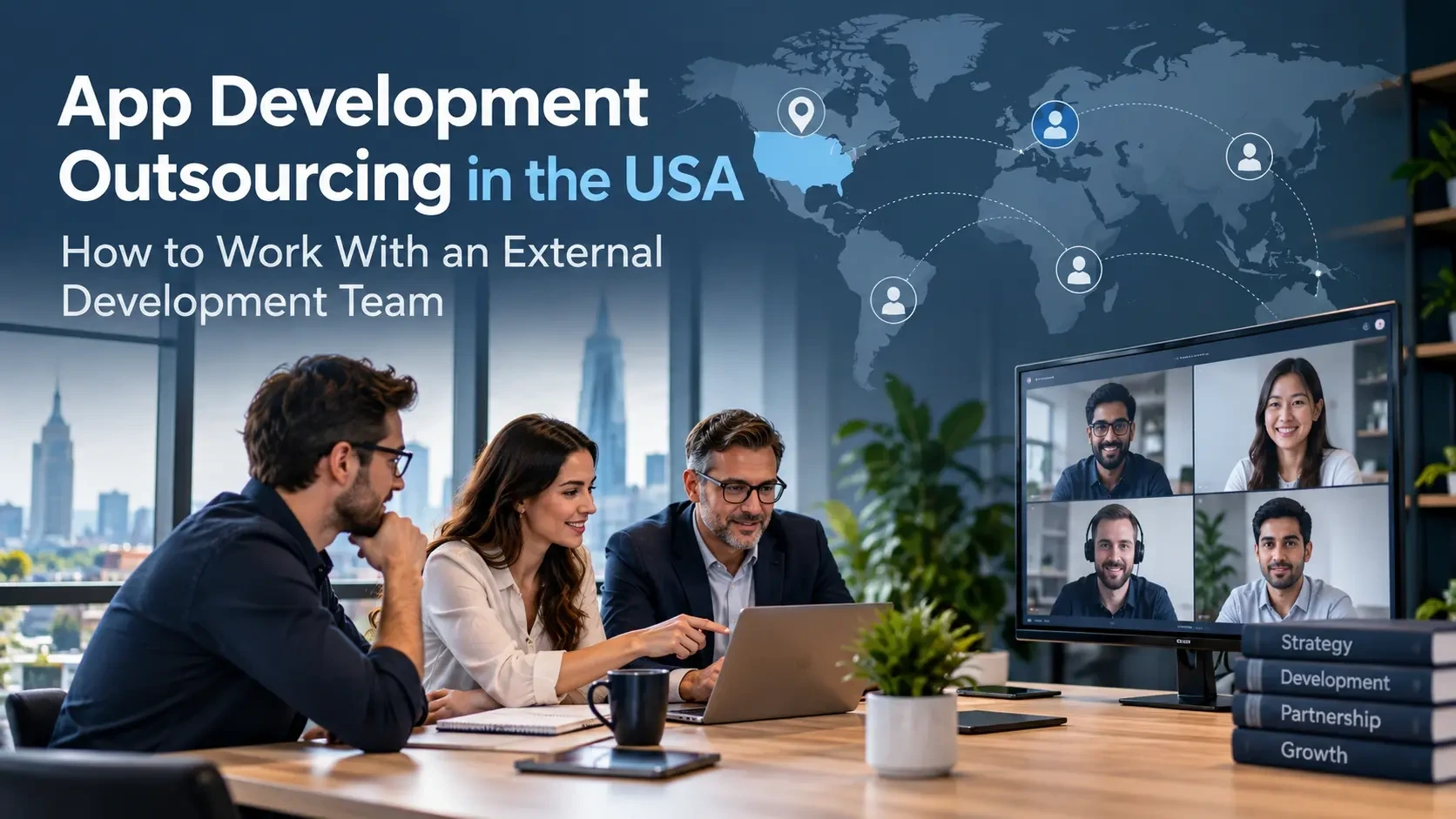
App development outsourcing or Mobile App Development Services in New york, USA - is a delivery model in which an external development team performs some or all of the work required to plan, design, build, test, launch, or maintain an application on behalf of a business. The engagement can cover discovery and product planning, UI/UX, frontend and backend development, cloud infrastructure, QA, integrations, maintenance, or a defined project from start to finish.
For a U.S. company, including businesses based in New York and other major US markets, app development outsourcing can involve a domestic agency, a nearshore team in the Americas, an offshore team, or a hybrid model with U.S.-based product management and distributed engineering. The right model depends on time-zone needs, product complexity, security requirements, budget, and how much control the internal team wants to retain.
Why Do US Businesses Outsource Android App Development?
- Add engineering capacity when the internal team is at full bandwidth.
- Access skills such as cloud, mobile, data, QA automation, cybersecurity, or specialized frameworks.
- When internal mobile engineering capacity is limited, an external team can provide additional specialists without requiring permanent hiring.hiring mobile app developers
- Launch a new product without immediately hiring a complete permanent team.
- Bring a defined project to completion while internal employees stay focused on core priorities.
- Create a flexible delivery model for product experiments, modernization, or new software initiatives.
Common Outsourcing Models
| Model | How it works | Best fit |
|---|---|---|
| Project-based | External team owns a defined scope and delivery | A product or major feature with clear requirements |
| Dedicated team | A stable external team works as an extension of the company | Longer roadmaps and ongoing product development |
| Staff augmentation | External specialists join the internal engineering team | Organizations that already manage product delivery |
| Managed outsourcing | External partner owns a broader delivery function | Businesses that want more end-to-end responsibility |
| Hybrid | Internal product leadership combines with external engineering | US companies balancing local ownership with distributed delivery |
What Should an Outsourced Development Partner Handle?
The scope should match the business need. Some companies outsource only development while keeping product management and design internally. Others use one external partner for discovery, UI/UX, engineering, QA, cloud deployment, and post-launch support.
For businesses comparing app development outsourcing companies in the USA, the scope should also make clear whether the partner is responsible for product strategy, mobile UI/UX, iOS and Android development, backend services, testing, release support, or ongoing maintenance. Businesses can also review digitalheroesco.com/services/mobile-app-development-company when defining the expected scope.
| Area | Questions to define before work starts |
|---|---|
| Product discovery | What problem, users, business goals, and success criteria are in scope? |
| UI/UX | Who owns research, flows, interface design, prototypes, and usability testing? |
| Engineering | Which frontend, backend, mobile, database, and integration responsibilities are included? |
| Cloud and DevOps | Who manages environments, deployment, observability, backups, and infrastructure? |
| Quality assurance | What will be tested, on which devices and environments, and at what stages? |
| Security | How are access, secrets, data, dependencies, and security reviews handled? |
| Documentation | What technical and operational documentation will be delivered? |
| Support | Who handles bugs, updates, monitoring, and future changes after launch? |
How to Choose an App Development Outsourcing Partner
- Define the outcome before comparing vendors. A clear problem statement, target users, scope, and success criteria make proposals easier to compare.
- Review relevant experience. Look for projects with similar product complexity, integrations, industry constraints, or delivery requirements.
- Ask how the team will communicate. Confirm meeting cadence, reporting, time-zone overlap, escalation paths, and who owns day-to-day decisions.
- Confirm technical ownership. Source code, repositories, design files, cloud accounts, documentation, and intellectual property should be clearly addressed in the agreement.
- Understand the delivery process. Ask how requirements are documented, how work is reviewed, how changes are approved, and how quality is measured.
- Plan for security and access. Clarify least-privilege access, credentials, environments, data handling, dependency management, and incident procedures.
- Discuss post-launch support. Decide who will handle defects, monitoring, releases, maintenance, and future feature work before the first release.
- Compare total delivery risk, not just the quoted price. A cheaper proposal can become expensive when communication, rework, ownership, or quality controls are weak.
What to Include in an Outsourcing Contract
How to Manage an External Development Team in USA
| Management practice | What it should look like |
|---|---|
| One accountable owner | A named person on each side who can make or escalate decisions |
| Written scope | A shared definition of deliverables, exclusions, and acceptance criteria |
| Regular demos | Working software reviewed frequently instead of only at the end |
| Visible backlog | Priorities and status that both teams can understand |
| Decision log | Important product and technical decisions recorded for later reference |
| Access discipline | Only the accounts, environments, and data needed for current work |
| Quality gates | Testing and review before important releases |
| Post-launch review | Metrics, incidents, feedback, and next steps reviewed after release |
How Can Businesses Keep App Development Outsourcing Secure?
Security needs to be part of the outsourcing model, not an afterthought. Before sharing production data or credentials, define who can access what, where secrets are stored, how changes are reviewed, how dependencies are updated, and what happens if an account or device is compromised.
Teams planning a mobile project can also review common before kickoff so recurring delivery risks are discussed early.
A practical starting point is the , which provides a common structure for managing cybersecurity risk. The framework can help teams discuss security responsibilities with an external app development partner.
For regulated products, the outsourcing partner may also need to follow requirements connected to the data and industry. A healthcare application may involve , while payment-related systems can involve . Privacy duties can also vary by state and product audience. The exact compliance scope should be assessed for the application rather than assumed from the outsourcing model alone.
- Promises a very low price without a clear scope or delivery model.
- Avoids explaining who will actually perform the work.
- Cannot show relevant project experience or explain technical decisions.
- Treats source-code and infrastructure ownership as an afterthought.
- Has no clear QA, security, documentation, or post-launch process.
- Pushes a large feature list into the first release without discussing priorities.
- Provides vague answers about communication, availability, or escalation.
How Much Control Should a US Business Keep?
Outsourcing does not require handing over every decision. A business can keep product strategy, brand direction, customer knowledge, and key business decisions internally while using the external team for execution. A mature partner should make the boundaries explicit and help the internal team understand what is being built and why.
App Development Outsourcing vs. Hiring an In-House Team in USA
| Factor | Outsourcing | In-house |
|---|---|---|
| Hiring speed | Can add an existing team or specialists more quickly | Requires recruiting and onboarding |
| Control | Depends on governance and contract structure | Direct organizational control |
| Specialized skills | Can access broader specialist capacity | Requires hiring or training |
| Long-term ownership | Needs strong documentation and handover practices | Knowledge stays inside the organization |
| Team integration | Requires deliberate communication and process | Usually simpler organizational alignment |
| Scaling capacity | Can expand or reduce external capacity | Depends on hiring plans and internal headcount |
A Practical Outsourcing Roadmap for Mobile App or Android App Development Company in New York, USA
| Phase | Primary goal | Key output |
|---|---|---|
| Assess | Decide what should be outsourced | Scope and operating model |
| Select | Choose the right partner | Proposal comparison and due diligence |
| Kickoff | Align people, tools, and access | Plan, responsibilities, environments |
| Build | Deliver in reviewable increments | Working software and QA evidence |
| Launch | Release with controlled ownership | Production deployment and handover |
| Improve | Measure and maintain | Support plan and next-product decisions |
Questions to Ask Before Outsourcing an App Development Company
- Who is responsible for delivery day to day?
- Which people will actually work on the project?
- How will you handle scope changes and new requirements?
- How often will we review working software?
- Where will the source code, design files, and infrastructure accounts live?
- What security controls and access practices do you use?
- How is quality assurance organized?
- What support is included after launch?
- What happens if we need to transfer the project to another team?
Need an App Development Outsourcing Partner?
The right app development outsourcing partner should make delivery easier to manage, not create another layer of uncertainty. Before signing, make sure the scope, ownership, communication, security, quality controls, and post-launch responsibilities are clear.
Businesses considering a wider outsourcing engagement can also review to compare delivery scope and responsibilities.
For mobile app launches, platform requirements should also be reviewed early. The and can help teams identify release and policy requirements before final QA.
Frequently Asked Questions for App Development Outsourcing
How Much Does App Development Outsourcing Cost in the USA?
For a deeper cost reference, see the guide to mobile app development costs when estimating budgets and comparing outsourcing options.
Costs vary based on application complexity, features, platform requirements, team structure, location, and post-launch support. A clear scope and delivery model are more useful for budgeting than comparing hourly rates alone.
Frequently asked questions
What is app development outsourcing?
App development outsourcing is a delivery model in which an external development team handles some or all of an application's planning, design, development, testing, launch, or maintenance. The scope can include strategy, UI/UX, engineering, cloud work, launch, maintenance, or a defined project.
Is app development outsourcing good for US companies?
It can be effective when the business has clear goals, strong communication, appropriate security controls, and a partner with relevant technical experience. The right model depends on the company's product, team structure, timeline, and governance needs.
What should I look for in an app development outsourcing company?
Look for relevant experience, transparent communication, clear ownership, strong QA, security practices, documentation, realistic delivery planning, and a defined post-launch support model.
What is the difference between outsourcing and staff augmentation?
Outsourcing generally means an external provider owns a defined delivery responsibility, while staff augmentation adds external specialists to work under the client's existing management and processes. Some partnerships combine elements of both.
How do I protect intellectual property when outsourcing app development?
Address intellectual property ownership, repository access, design assets, documentation, confidentiality, and source-code handover explicitly in the contract. Make sure the agreement reflects the ownership model your business actually needs.
Can an outsourced team work with our in-house developers?
Yes. Many businesses use hybrid models in which internal product or engineering leaders work alongside an external team. Clear responsibilities, shared tools, documentation, and communication routines are important for this model.
How can I avoid hidden costs in app development outsourcing?
Define the scope, exclusions, assumptions, acceptance criteria, change process, third-party costs, infrastructure responsibilities, and post-launch support before signing. Compare the total delivery model rather than only the headline rate.
Final Takeaway
App development outsourcing can give a U.S. business access to engineering capacity and specialized skills without requiring every role to be built internally. But the outcome depends on more than technical talent.
Choose a partner that can explain the delivery model, protect ownership, communicate clearly, manage quality and security, and support the product after launch. With those foundations in place, an external development team can become a practical extension of the business rather than a source of additional complexity.
Note: Compliance, privacy, intellectual-property, and contractual requirements can vary by industry, state, product, and business structure. This guide provides general information and is not legal advice.