New York operators, builds worth studying.
New York's operator-led scene skews toward Shopify and DTC commerce, and the brands below run builds worth studying: Ghia, Hawthorne, Maude, Faherty Brand. None are Digital Heroes clients, they are the kind of founder-run businesses we admire and build for in New York, and this is an editorial read of what each gets right, taken from the public storefront.
How we chose, and what this is not.
- These are operator-led brands we admire in the New York market, picked from public research, not Digital Heroes clients. No affiliation, no engagement, no endorsement is implied.
- Every observation is our own editorial read of each brand's public homepage. The screenshots are public storefronts, shown for commentary.
- Digital Heroes is excluded, we do not rank ourselves alongside brands we admire.
- Each brand links to its own site. Go buy from them.
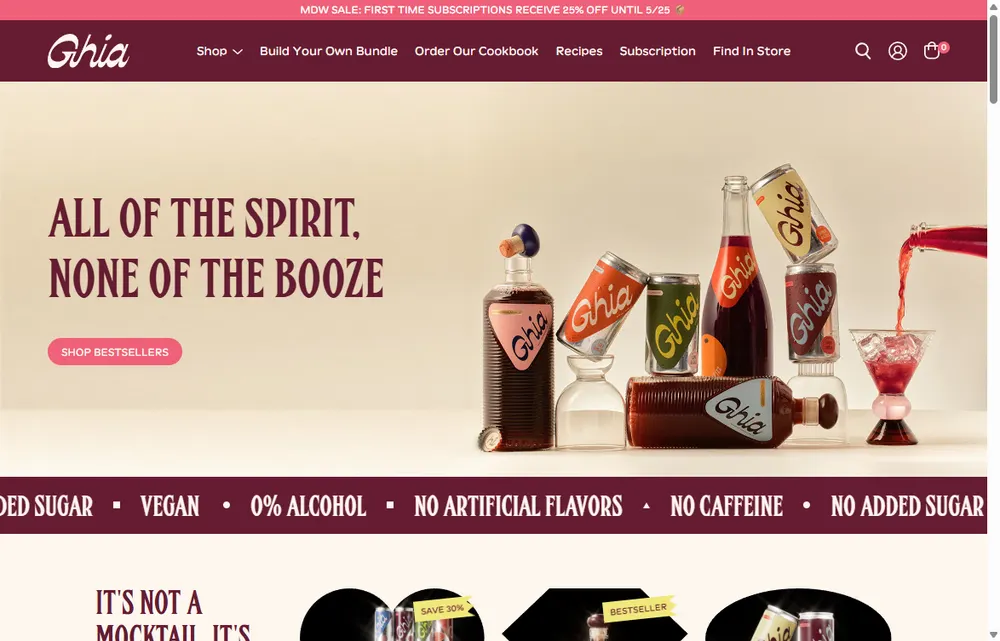
Ghia.
Mélanie Masarin, Founder & CEO, runs Ghia in New York, an operator-led brand we admire (not a Digital Heroes client). drinkghia.com. A Plus build earns its tier when the merchandising logic, B2B price lists, or subscription cadence are genuinely custom, not when it is a Dawn theme with a bigger bill. The tell of a good one is that the complexity lives in Functions and metafields, not in a pile of apps each adding latency.
The build worth studying is the one that stays fast and focused as it grows, custom logic where it differentiates, restraint everywhere else. That is harder than adding features, and it is what separates a store that scales from one that stalls.
Hawthorne.
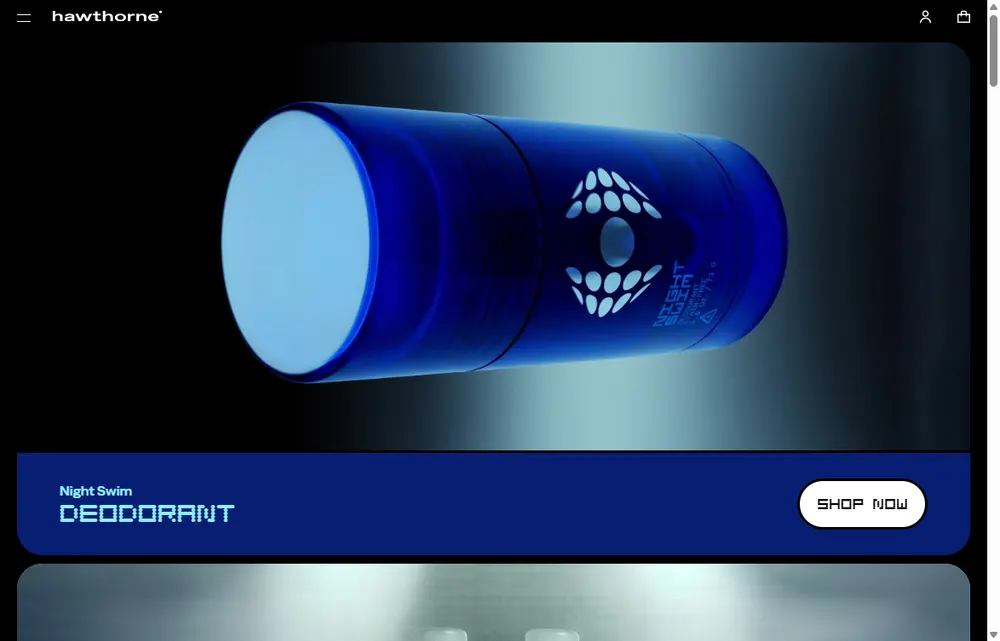
Brian Jeong, Co-Founder & CEO, runs Hawthorne in New York, an operator-led brand we admire (not a Digital Heroes client). hawthorne.co. On Shopify Plus the build problem shifts from "can it sell" to "can it sell at volume", checkout extensibility, scripts moved to Functions, and a theme that holds Core Web Vitals while the catalog and traffic both grow. A Plus storefront that keeps LCP under 2.5s through a Black-Friday spike is doing quiet engineering most shoppers never see.
What an operator can learn here is the discipline behind the surface: a fast page, a clear single action, and trust signals where the decision actually happens. The craft is mostly in what was left out.
Maude.
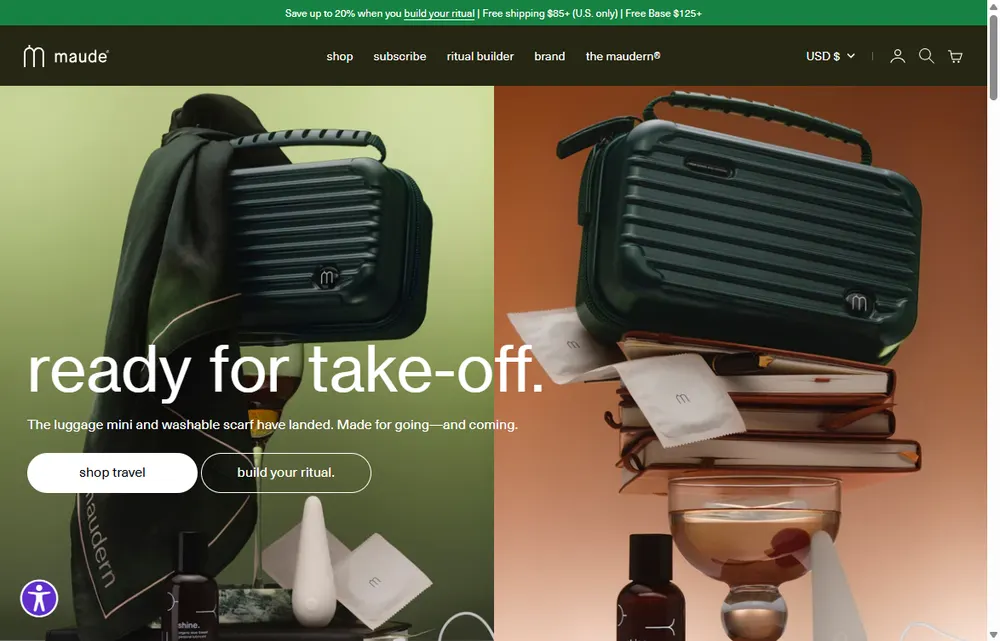
Éva Goicochea, Founder & CEO, runs Maude in New York, an operator-led brand we admire (not a Digital Heroes client). getmaude.com. On Shopify Plus the build problem shifts from "can it sell" to "can it sell at volume", checkout extensibility, scripts moved to Functions, and a theme that holds Core Web Vitals while the catalog and traffic both grow. A Plus storefront that keeps LCP under 2.5s through a Black-Friday spike is doing quiet engineering most shoppers never see.
What an operator can learn here is the discipline behind the surface: a fast page, a clear single action, and trust signals where the decision actually happens. The craft is mostly in what was left out.
Faherty Brand.
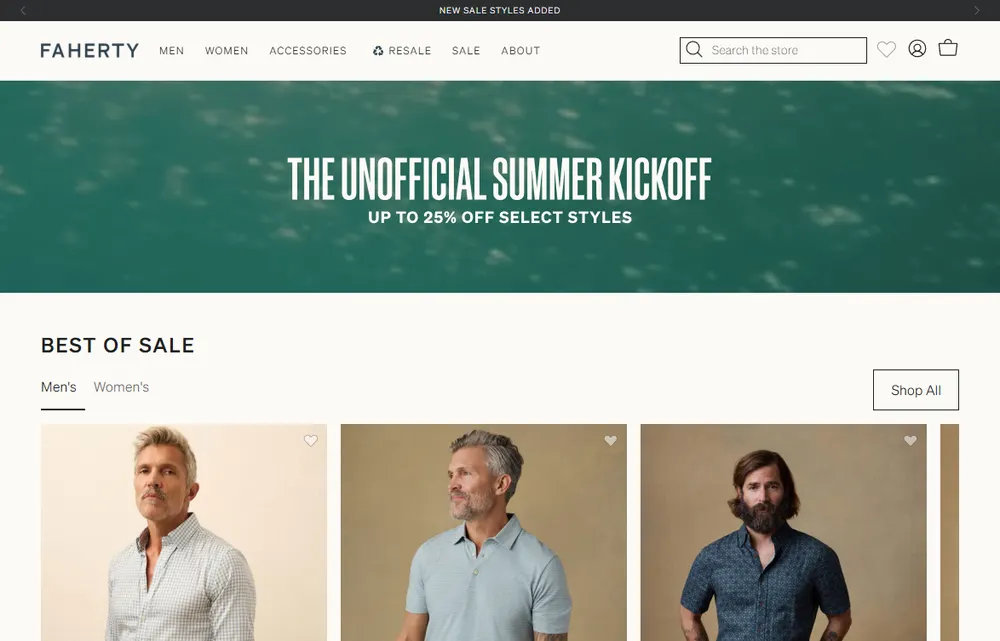
Alex Faherty, Co-Founder & CEO, runs Faherty Brand in New York, an operator-led brand we admire (not a Digital Heroes client). fahertybrand.com. A replatform onto Shopify is a migration, not a repaint: the URL map, the 301s, and the on-page signals have to carry forward or the new store loses six months of organic traffic to recover. The careful version locks a "pages that must not break" list before a single new pixel is designed.
What an operator can learn here is the discipline behind the surface: a fast page, a clear single action, and trust signals where the decision actually happens. The craft is mostly in what was left out.
New York's operator-led commerce runs deeper.
New York runs a genuinely founder-led commerce scene, operator-run brands rather than venture-flipped ones. The builds above are the ones we found most instructive to read, but they are a sample, not a ranking.
New York's consumer economy is larger than its startup headlines suggest. The New York City Comptroller's December 2023 retail and consumer services report counts 669,300 private-sector employees in that cluster, 18 percent of all private jobs citywide, producing $100.7 billion in taxable sales, 47 percent of every taxable dollar spent in the city. The same report found taxable sales from electronic shopping almost tripled between 2019 and 2023. Capital, though, has narrowed: AlleyWatch's funding index puts New York venture funding at $10.4 billion in 2023 against $35.3 billion in 2021, and in Q2 2026 just 24 rounds of $100 million or more absorbed 63 percent of the quarter's dollars.
Show the data behind this chart
| Year | Capital raised (USD billions) |
|---|---|
| 2021 | 35.3 USD billions |
| 2022 | 18.3 USD billions |
| 2023 | 10.4 USD billions |
| 2024 | 15.1 USD billions |
| 2025 | 19.1 USD billions |
If you run an operator-led New York brand and want an honest read of your own build, what is converting, what is leaking, and what a careful team would change first, that is the kind of work we do. The audit is free and the framing is plain. More city reads: Brighton, Bristol, or your own city via New York services.