Your Coventry plant runs three shifts and BambooHR thinks everyone works nine-to-five
Off-the-shelf HR platforms like BambooHR, Workday, and Gusto are built around salaried, single-shift office staff, which is precisely the wrong shape for a Coventry plant running rotating shifts, a skills matrix, and certifications that expire.
On this page
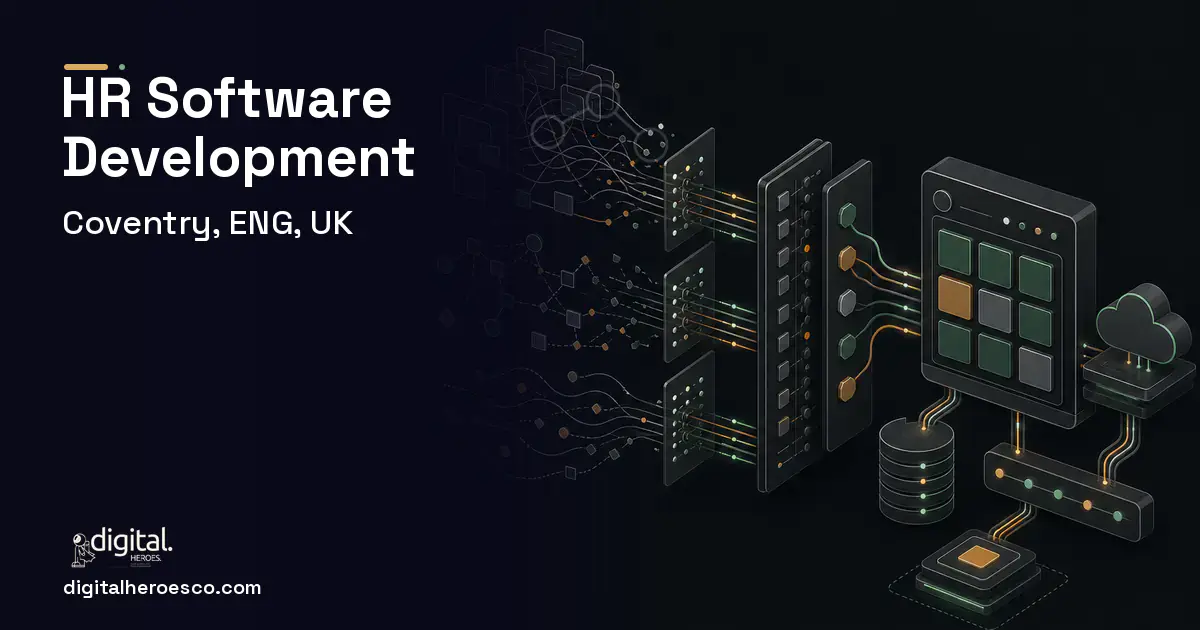
Off-the-shelf HR (Human Resources) platforms like BambooHR, Workday, and Gusto are built around salaried, single-shift office staff, which is precisely the wrong shape for a Coventry plant running rotating shifts, a skills matrix, and certifications that expire. Custom HR software for that reality costs £40,000 to £100,000 over 3 to 6 months and pays back by making sure the right qualified people are on the right line on every shift.
BambooHR and Gusto assume a workforce that clocks in at nine and leaves at five. A Coventry manufacturer or logistics operator runs rotating shifts, weekend cover, and agency top-ups, and needs to know not just who's working but whether they're certified for the operation they're assigned to. The off-the-shelf platform has no concept of a skills matrix or a forklift licence that lapsed last week, so that knowledge lives in a spreadsheet the line manager keeps.
The risk is real and specific. If you put an uncertified operator on a safety-critical machine, or run a shift below the trained headcount an OEM contract requires, you've got a compliance and quality exposure that the generic HR system never warned you about, because it was never modelling the thing that matters on a shop floor.
What breaks first in Coventry
- Rotating shifts and weekend cover don't fit nine-to-five HR platforms
- Skills matrices and machine certifications live in a line manager's spreadsheet
- Expiring certifications (forklift, FLT, safety) aren't tracked, so lapses slip through
- No link between who's qualified and who's actually scheduled on each shift
The fix: HR built for Coventry, not rented
Custom HR software models your actual workforce: rotating shift patterns, a live skills matrix, certification expiry alerts, and a scheduling view that only lets you assign qualified people to each operation. The knowledge that currently lives in a manager's head and a spreadsheet becomes a system that warns you before an uncertified operator or an understaffed shift becomes a compliance problem.
What HR costs in Coventry
| Project scope | Typical cost | Timeline |
|---|---|---|
| Shift scheduling with skills matrix | £40k to £60k | 3 to 4 months |
| Add certification tracking and audit records | £60k to £80k | 4 to 5 months |
| Full HR platform with payroll integration | £80k to £100k | 5 to 6 months |
The capability list that earns its budget
HR services we deliver in Coventry
The engagements Coventry teams bring us most often: performance management software, custom HR software, HRIS development, payroll software and employee onboarding system.
Exactly what you get
HR software built around a shop floor, not an office: rotating shift scheduling, a live skills matrix tying people to the operations they're qualified for, certification tracking with expiry alerts, and scheduling that simply won't let you assign an uncertified operator to safety-critical work. Training records feed your IATF and ISO audit evidence, and payroll integration handles shift premiums. It commonly sits alongside your ERP (Enterprise Resource Planning) for headcount costing and your field service management software where you also schedule mobile engineers.
How to choose a developer in Coventry
Ask candidates to walk through how they'd schedule a three-shift week with weekend cover and an expiring forklift licence, and watch whether they reach for a real qualification model or a glorified rota. The detail that matters is qualification-aware scheduling. A team familiar with Coventry's manufacturing and logistics employers will already grasp that the skills matrix and certification expiry are the compliance-critical features, not just a nicer-looking holiday booking screen.
- !No shift-pattern experience; ask how they model rotating shifts and agency cover
- !They treat skills as a text field; ask how qualification-aware scheduling works
- !No certification expiry alerts; ask how a lapsed forklift licence gets caught
- !No audit-record plan; ask how training evidence reaches an IATF audit
- !No payroll-integration story; ask how shift premiums flow through to pay
Teams investing in HR in Coventry usually scope it next to pos, warehouse management, helpdesk & ticketing, since these systems share data and budgets. Weighing options across the region? Nearby: HR in London, Birmingham and Manchester. Want it built, not just budgeted? That is our custom software development practice.
The evidence behind this guide
Independent findings on why this investment pays off. Every link goes to the primary source.
- An EY survey found one in five U.S. payrolls contains errors, each costing an average of $291 to remediate, with a typical 1,000-employee organization spending roughly 29 workweeks per year fixing common payroll errors. Source: EY (Ernst & Young) (2022) →
- SHRM's 2025 benchmarking data puts the average cost-per-hire at $5,475 for nonexecutive roles and $35,879 for executive roles - executive hires are on average nearly 7x more expensive than nonexecutive hires. Source: SHRM (Society for Human Resource Management) (2025) →
- Across 1,471 IT projects the average cost overrun was 27%, but one in six projects was a 'black swan' with an average cost overrun of 200% and a schedule overrun of nearly 70%. Source: Harvard Business Review (Bent Flyvbjerg & Alexander Budzier, University of Oxford) (2011) →
- Median SaaS spend reached $9,455 per employee, and organizations leave an average of 36% of their SaaS licenses unused. Source: Zylo (2026) →
Frequently asked questions
Why doesn't BambooHR work for a plant?
Because it's built around salaried, single-shift office staff, with no concept of rotating shifts, a skills matrix, or machine certifications that expire. For a Coventry manufacturer, who's qualified for which operation on which shift is the central HR question, and that's exactly what the off-the-shelf platforms don't model.
How does qualification-aware scheduling work?
The system holds a live skills matrix mapping each person to the operations and machines they're certified for, and the scheduler blocks any assignment that would put an uncertified or lapsed operator on a job. That turns a compliance risk into a rule the software enforces.
Can it warn us before a certification expires?
Yes. Certification and licence tracking with expiry alerts flags a forklift, FLT, or safety qualification before it lapses, so you arrange renewal in time rather than discovering the gap when an auditor or an incident finds it.
What does custom HR software cost?
Shift scheduling with a skills matrix runs £40,000 to £60,000. Adding certification tracking and audit records takes it to £80,000, and a full platform with payroll integration reaches £100,000, over 3 to 6 months.
Does it replace payroll?
Usually it integrates with payroll rather than replacing it, feeding shift premiums, overtime, and hours through to your existing payroll system. The custom value is in scheduling, skills, and certification, which is what off-the-shelf can't do.
How much does custom HR software cost for a small business?
A core HR system covering employee records, onboarding, time off, and documents typically lands between $30,000 and $80,000 for a small business, based on Digital Heroes delivery across 2,000+ projects. Full platforms that add applicant tracking, performance reviews, and time and attendance run $80,000 to $250,000. Most teams under 100 employees start with the core and expand after the first release proves itself.
What does it cost to maintain custom HR software after launch?
Plan for 15 to 20 percent of the original build cost per year, the average across Digital Heroes maintenance contracts, covering security patches, dependency updates, small feature changes, and monitoring. Hosting for a company under 1,000 employees usually adds $100 to $400 a month on AWS or similar. Unlike BambooHR or Workday, the cost does not grow every time you hire ten more people.
Should I hire a freelancer or an agency to build our HR system?
A freelancer works for a single module or one integration, but a full HR platform needs design, backend, security review, and QA running at once, which is agency territory. Senior freelancers in Coventry usually quote $80 to $150 an hour, and everything stops when they take a vacation or a bigger contract. For software holding every employee's salary and personal data, a bus factor of one person is the real cost.
Should we build our own payroll engine or integrate with a payroll provider?
Integrate, almost without exception; payroll tax across US federal, state, and local jurisdictions is a compliance business rather than a software feature, and getting it wrong creates real liability. Keep ADP, Gusto, or Paychex as the engine and build your workflows on top through their APIs. Nearly every payroll-connected platform Digital Heroes has delivered integrates instead of rebuilding, and the exceptions regretted it.
When does Gusto's per-person pricing stop making sense?
Gusto's Plus plan lists at $80 per month plus $12 per person, so a 250-employee company pays roughly $37,000 a year for workflows it cannot change. The common fix is keeping Gusto for payroll, which it does well, and building custom software for onboarding, scheduling, and PTO around it through Gusto's API. That caps the subscription at payroll only while the workflows finally match how you operate.
Can custom software replace ADP Workforce Now?
It can replace the HR layer, meaning records, onboarding, time off, and reporting, while keeping ADP's payroll engine underneath through its APIs, which is what most Digital Heroes clients on ADP choose. Rebuilding payroll tax calculation itself is rarely worth it, because ADP and Gusto maintain tax tables across thousands of jurisdictions. You get your workflows back without taking on tax liability.
At what point does a company outgrow BambooHR?
The breaking point Digital Heroes sees most often is 100 to 250 employees, when approval chains, multi-state rules, or shift scheduling stop fitting BambooHR's fixed workflows and HR starts managing exceptions in spreadsheets. If your team exports to Excel every week to do something the platform cannot, you have already outgrown it. Per-employee pricing compounds the problem, since the bill grows with every hire while the feature gaps stay the same.
How long until custom HR software pays for itself?
For companies over 100 employees, payback typically lands in 24 to 36 months across Digital Heroes projects, driven by cancelled per-seat subscriptions and recovered HR admin hours. A 200-person company spending $40,000 a year on HR tools plus a day a week of manual workarounds crosses even faster. Under 50 employees the math usually favors staying on Gusto or BambooHR, and an honest agency will tell you that.
Can I build my product on a no-code tool like Bubble instead of hiring developers?
For testing whether anyone wants the product, yes, and Bubble's paid plans start at $29 a month, which is the cheapest validation you will ever buy. The ceiling arrives with complex data relationships, heavy integrations, performance at a few thousand users, and the fact that you cannot export a Bubble app to servers you control. A path many Digital Heroes clients take: prove demand on no-code, then rebuild custom once revenue justifies it, treating the no-code version as a paid prototype rather than a foundation.
What should version one of a custom HR system include?
Employee records, onboarding checklists, time-off requests, and a payroll sync, which is roughly 12 to 16 weeks of work; save applicant tracking, performance reviews, and analytics for version two. The most expensive mistake in HR builds is scoping all ten modules into version one and launching nothing for a year. Ship the four workflows that hurt most, then let real usage set the roadmap.
What security does custom HR software need for employee data?
The baseline is encryption at rest and in transit, role-based access so salary and medical data are visible only to the right people, multi-factor authentication, and an audit log of who viewed what. If you have EU employees, GDPR applies; if you plan to sell the software to other companies later, SOC 2 Type II becomes a sales requirement. Ask any agency to walk through their access-control design before signing, because HR data is the most sensitive dataset most companies hold.
How do I calculate whether custom software will pay for itself?
Divide the build cost by the monthly benefit, where benefit is hours saved times loaded hourly cost, plus subscription fees replaced, plus any revenue the software unlocks. Three staff saving 10 hours a week each at a $40 loaded rate is about $62,000 a year, which pays back a $60,000 build in roughly 12 months. Across Digital Heroes internal-tool projects, 12 to 24 months is the normal payback range, and anything projecting under 6 months usually means the spreadsheet is hiding costs.
What should I prepare before contacting an agency about HR software?
Bring four things: your current tool list with annual costs, headcount now and projected in two years, the five workflows that waste the most HR hours each week, and any compliance requirements like multi-state employment or union rules. A sample data export from your current system helps too. Digital Heroes scoping calls with this prepared produce a fixed quote in days instead of weeks.
How many people should be working on my software project?
Three to five for a typical focused build: a project lead, one or two engineers, a designer, and part-time QA, which is the standard shape across 2,000+ Digital Heroes projects. Larger platforms justify 6 to 10, but a ten-person team on a small first version usually signals bill padding rather than horsepower. What predicts success is whether a senior engineer is writing your code daily, not the headcount on the proposal.
How many SaaS seats do we need before building custom becomes cheaper?
The crossover usually shows up between 20 and 50 seats on premium tiers. Salesforce Enterprise lists at $165 per user per month, so 40 users cost about $79,000 a year in subscriptions, which is real money against a custom system you would own outright. Run the comparison over three years: if subscription spend beats the build cost plus 15-20% annual maintenance, custom wins on price before you even count workflow fit.
Who can build custom HR software for a business in Coventry?
Digital Heroes builds custom HR software systems for operators who have outgrown the off-the-shelf tools in their category. The work is delivered remotely: our engineers work from Delhi and Lucknow, leadership is in New York, and some team members live in London and Sydney and work remotely from there. We have no office in Coventry. You can chat with the team directly, and every form gets an email reply within 24 hours.
Related guides

More from Rishabh.
Web Developer · Lucknow · 1 post on the site
Published · Last updated .