Boston operators, builds worth studying.
Boston's operator-led scene skews toward Shopify and DTC commerce, and the brands below run builds worth studying: Tracksmith, Ministry of Supply, FreshCut Paper, Kodex. None are Digital Heroes clients, they are the kind of founder-run businesses we admire and build for in Boston, and this is an editorial read of what each gets right, taken from the public storefront.
How we chose, and what this is not.
- These are operator-led brands we admire in the Boston market, picked from public research, not Digital Heroes clients. No affiliation, no engagement, no endorsement is implied.
- Every observation is our own editorial read of each brand's public homepage. The screenshots are public storefronts, shown for commentary.
- Digital Heroes is excluded, we do not rank ourselves alongside brands we admire.
- Each brand links to its own site. Go buy from them.
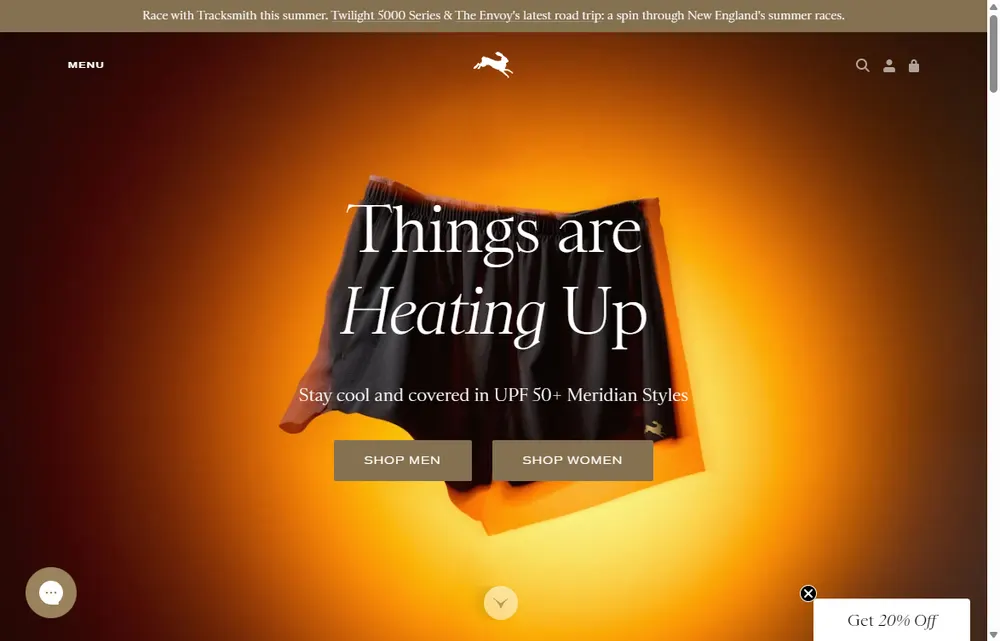
Tracksmith.
Matt Taylor, Co-Founder, runs Tracksmith in Boston, an operator-led brand we admire (not a Digital Heroes client). tracksmith.com. On Shopify Plus the build problem shifts from "can it sell" to "can it sell at volume", checkout extensibility, scripts moved to Functions, and a theme that holds Core Web Vitals while the catalog and traffic both grow. A Plus storefront that keeps LCP under 2.5s through a Black-Friday spike is doing quiet engineering most shoppers never see.
What an operator can learn here is the discipline behind the surface: a fast page, a clear single action, and trust signals where the decision actually happens. The craft is mostly in what was left out.
Ministry of Supply.
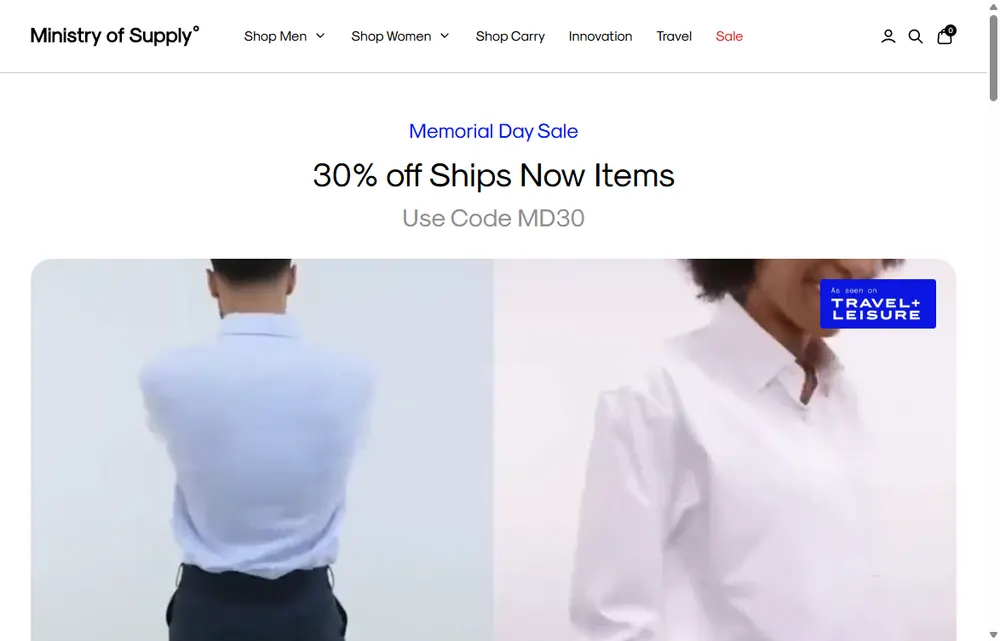
Aman Advani, Co-Founder & CEO, runs Ministry of Supply in Boston, an operator-led brand we admire (not a Digital Heroes client). ministryofsupply.com. A Plus build earns its tier when the merchandising logic, B2B price lists, or subscription cadence are genuinely custom, not when it is a Dawn theme with a bigger bill. The tell of a good one is that the complexity lives in Functions and metafields, not in a pile of apps each adding latency.
The build worth studying is the one that stays fast and focused as it grows, custom logic where it differentiates, restraint everywhere else. That is harder than adding features, and it is what separates a store that scales from one that stalls.
FreshCut Paper.
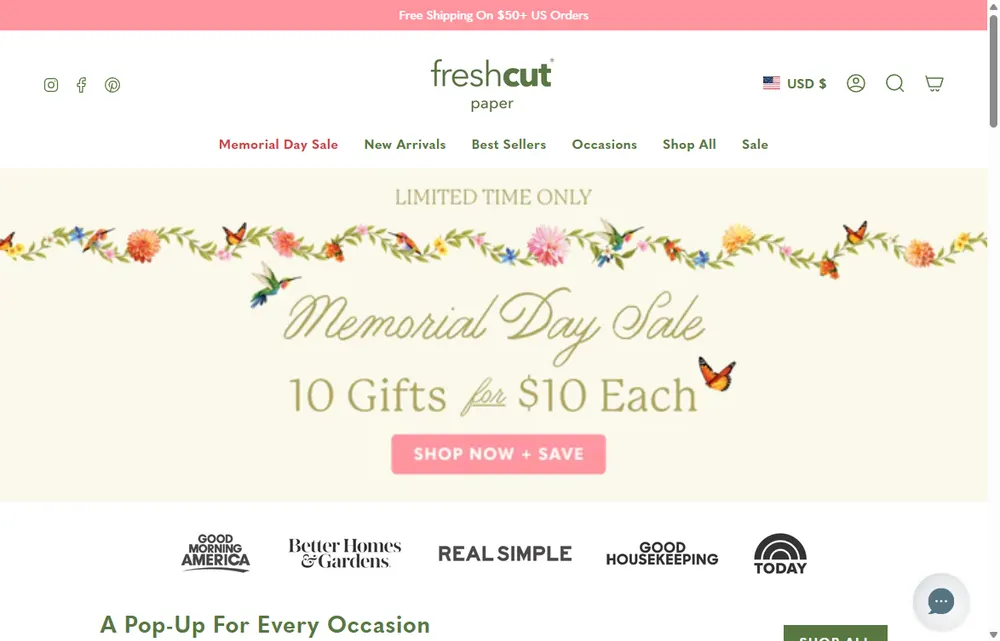
Peter Hewitt, Founder, runs FreshCut Paper in Boston, an operator-led brand we admire (not a Digital Heroes client). freshcutpaper.com. The Shopify build that ages well keeps its custom logic in the variant, metafield, and Liquid layer rather than a stack of overlapping apps, every app is latency and a future compatibility risk. A lean theme with a fast product page beats a feature-rich one that takes four seconds to paint on mobile.
What an operator can learn here is the discipline behind the surface: a fast page, a clear single action, and trust signals where the decision actually happens. The craft is mostly in what was left out.
Kodex.
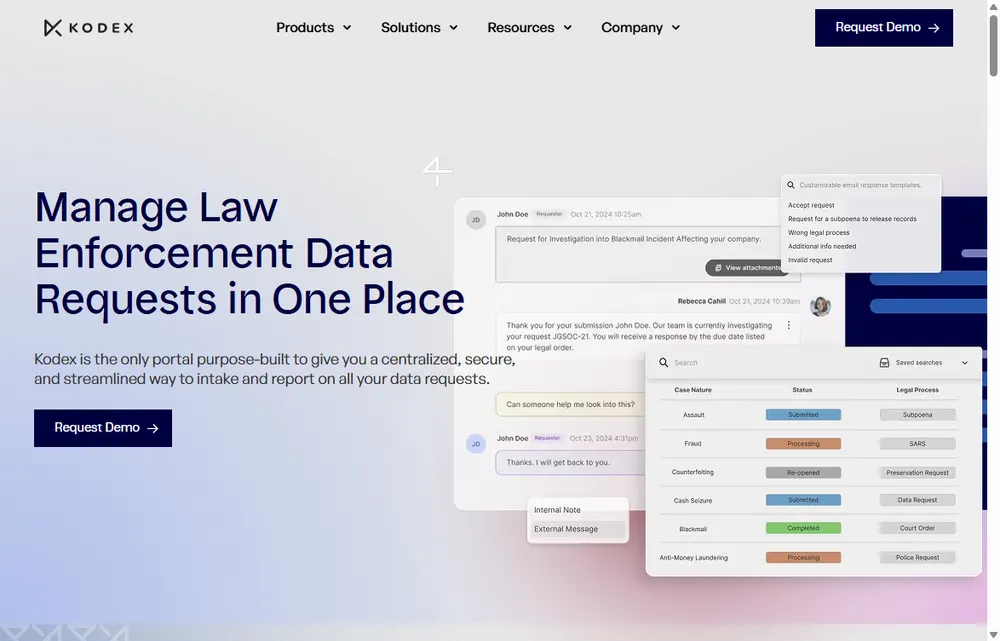
Matt Donahue, Founder & CEO, runs Kodex in Boston, an operator-led brand we admire (not a Digital Heroes client). kodex.us. Product-led SaaS lives or dies on the first scroll and the time-to-value after signup. The build that converts shows the product working immediately and routes to a free trial; the page weight stays low because for a self-serve tool, speed is a conversion lever, not a vanity metric.
The build worth studying is the one that stays fast and focused as it grows, custom logic where it differentiates, restraint everywhere else. That is harder than adding features, and it is what separates a store that scales from one that stalls.
Boston's operator-led commerce runs deeper.
Boston runs a genuinely founder-led commerce scene, operator-run brands rather than venture-flipped ones. The builds above are the ones we found most instructive to read, but they are a sample, not a ranking.
Boston is not only where these brands sell, it is where much of the software they sell on gets written. Three Boston-headquartered commerce companies reported fiscal 2025 results in February 2026. Klaviyo posted $1.23 billion in revenue and over 193,000 customers, up from 167,000 a year earlier, with accounts above $50,000 in annual recurring revenue growing 37 percent to 3,912. Toast processed $195.1 billion in gross payment volume across roughly 164,000 locations. Wayfair posted $12.46 billion in net revenue and 21.3 million active customers. Every figure here comes from the companies' own SEC Form 8-K exhibits.
Show the data behind this chart
| Company (Boston HQ) | FY2024 revenue | FY2025 revenue |
|---|---|---|
| Wayfair | 11.85 USD billions | 12.46 USD billions |
| Toast | 4.96 USD billions | 6.15 USD billions |
| Klaviyo | 0.94 USD billions | 1.23 USD billions |
If you run an operator-led Boston brand and want an honest read of your own build, what is converting, what is leaking, and what a careful team would change first, that is the kind of work we do. The audit is free and the framing is plain. More city reads: Brighton, Sydney, or your own city via Boston services.